






The Convergence of Reform and Repression: Analyzing the 1989 Pro-Democracy Movement
In the late 1980s, the People’s Republic of China stood at a critical geopolitical and economic crossroads. Following a decade of systemic liberalization initiated by Deng Xiaoping’s “Reform and Opening-up” policy, the nation was transitioning from a rigid command economy toward a more market-oriented framework. This period of economic gestation did not merely alter the financial landscape; it fostered a burgeoning expectation among the intelligentsia and the youth that political modernization would inevitably follow industrial progress. The events of May and June 1989 represent the ultimate collision between these rising democratic aspirations and the unyielding institutional architecture of the Chinese Communist Party (CCP).
The movement, which reached a fever pitch in Beijing during the spring of 1989, was not a sudden eruption but the culmination of years of intellectual ferment. As trade barriers fell and cultural exchange with the West increased, a generation of students began to view democratic rights not as a foreign imposition, but as a necessary corollary to economic freedom. This report examines the pivotal moments of this era, the organizational momentum of the student leaders, and the enduring legacy of the subsequent state response on global political-economic relations.
The Intersection of Economic Liberalization and Political Aspiration
The decade leading up to 1989 was characterized by a palpable sense of optimism within China’s urban centers. The leadership’s decision to integrate China into the global trade network had yielded significant dividends, lifting millions out of poverty and introducing a level of personal autonomy previously unknown in the Maoist era. However, this economic success created a “revolution of rising expectations.” Student organizers, most notably figures like Wu’er Kaixi, argued that the progressive trajectory of the country’s economy was fundamentally incompatible with a closed political system. To these leaders, the demonstrations were not acts of rebellion, but rather invitations to the CCP to continue its path toward a modern, transparent, and democratic governance model.

Throughout April 1989, the protests gained institutional depth. What began as a mourning period for the reformist leader Hu Yaobang evolved into a sophisticated demand for press freedom, government accountability, and an end to corruption within the party ranks. The protestors believed that by engaging in peaceful, massive demonstrations, they were providing the necessary civic pressure to empower reformers within the government. This belief in a “progressive China” was bolstered by the international climate of the time, as the Cold War entered its final stages and democratic movements gained traction across the Eastern Bloc.
The May 4th Mobilization: A Peak of Civil Engagement
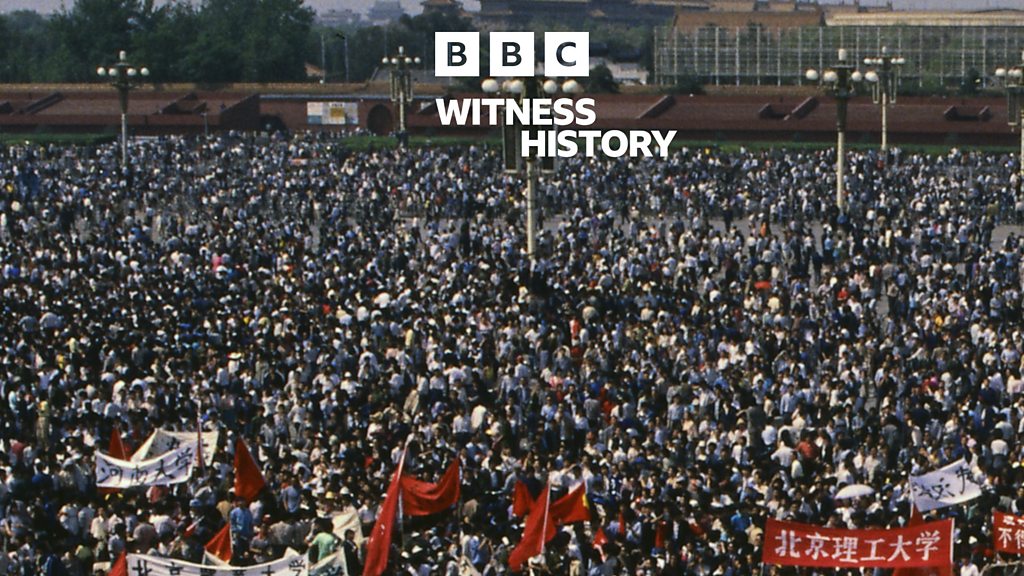
The movement reached its symbolic and operational zenith on May 4, 1989, the 70th anniversary of the historic 1919 May Fourth Movement. In a display of organizational prowess that stunned both domestic and international observers, a 10-kilometer line of protestors wound through the streets of Beijing. This was not merely a student march; it had expanded to include workers, intellectuals, and even some government officials. The sheer scale of the mobilization suggested that the push for democracy had moved from the periphery of academic debate into the mainstream of Chinese civic life.
Testimonies from the period describe a brief, exhilarating window of time where the impossible seemed attainable. The atmosphere in Tiananmen Square was one of disciplined defiance. Student leaders like Wu’er Kaixi managed to command the attention of the world’s media, presenting a vision of a China that could balance its socialist identity with democratic participation. For a few weeks in May, the state appeared hesitant, and the presence of huge numbers in the streets created a temporary power vacuum in which civil society began to breathe. It was a high point of collective belief,a moment when many dared to believe that the fight for democracy could be won through the sheer weight of public consensus.
Institutional Response and the Paradigm of Total Stability
The optimism of May was met with the brutal pragmatism of June. The CCP leadership, deeply divided over how to handle the escalating situation, eventually tilted toward the hardline faction. The introduction of martial law signaled the end of the period of dialogue. On the night of June 3rd and the morning of June 4th, the People’s Liberation Army was deployed to clear the square by any means necessary. The deployment of tanks and soldiers against unarmed civilians sent a definitive and bloody message: the state’s monopoly on power was non-negotiable, and organized protest would not be tolerated.
The crackdown represented a fundamental shift in China’s governance strategy. The “Tiananmen Consensus,” as it has been termed by some political scientists, established a new social contract: the state would provide continued economic growth and relative personal prosperity in exchange for the absolute relinquishment of political dissent. This paradigm of “stability maintenance” became the cornerstone of Chinese domestic policy. The use of military force did more than just disperse a crowd; it effectively decapitated the nascent civil society movement and forced the remaining reformers into exile or silence, fundamentally altering the country’s development path for the next three decades.
Concluding Analysis: The Legacy of 1989 on the Global Order
The events of 1989 in Beijing remain one of the most significant turning points in modern history, serving as a cautionary tale regarding the limitations of “soft” liberalization. From a business and geopolitical perspective, the aftermath of the crackdown forced a re-evaluation of sovereign risk for international investors. While the global community initially responded with sanctions and diplomatic cooling, the lure of China’s massive market eventually led to a restoration of trade relations. However, the underlying tension between China’s economic integration and its political authoritarianism remains the defining friction point of the 21st century.
Ultimately, the protests and their suppression proved that economic opening does not lead to an inevitable democratic transition. The resilience of the CCP’s authoritarian model in the years following 1989 has challenged the Western assumption that capitalism and democracy are inextricably linked. Today, the memory of those who marched in the 10km line in May 1989 serves as a stark reminder of a “what if” moment in history,a brief period when the world watched to see if the world’s most populous nation would embrace a different kind of future. The message sent by the tanks in June continues to resonate, defining the boundaries of political discourse in China and shaping the strategic calculations of global powers to this day.




