







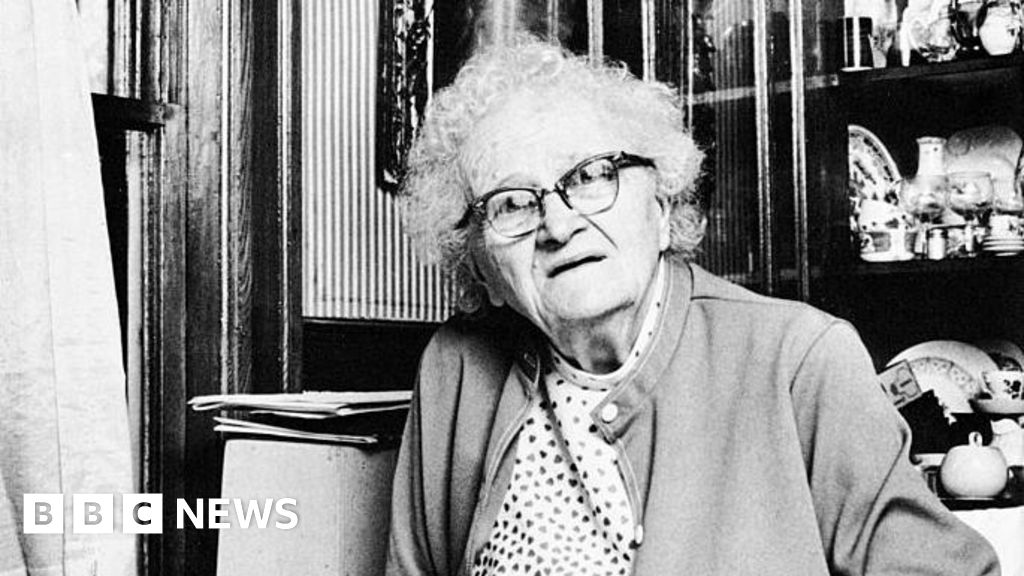
The Architect of Modern Stellar Physics: An Analytical Review of Cecilia Payne-Gaposchkin’s Legacy
The trajectory of modern astrophysics was fundamentally altered in the early 20th century by the arrival of Cecilia Payne-Gaposchkin, a scientist of exceptional brilliance and determination. Her contributions to the field did not merely add to the existing body of knowledge; they dismantled the prevailing chemical consensus of the era and established the foundational pillars of stellar spectroscopy. At a time when the scientific community operated under the assumption that the composition of stars mirrored that of the Earth, Payne-Gaposchkin utilized rigorous mathematical analysis and pioneering spectroscopic interpretation to prove that the universe is composed primarily of hydrogen and helium. Her work remains a cornerstone of physical science, representing one of the most significant intellectual leaps in human history.
The Spectroscopic Revolution and Chemical Composition
Prior to the 1920s, the astronomical community, led by figures such as Henry Norris Russell, maintained a terrestrial-centric view of the cosmos. It was widely believed that if one were to heat the crust of the Earth to the temperatures of the Sun, the resulting spectrum would be identical to that observed through a telescope. This “equilibrium of elements” theory was the gold standard of the time. However, Payne-Gaposchkin, working at the Harvard College Observatory, applied the then-nascent theories of quantum mechanics and thermal ionization,specifically the Saha ionization equation,to the spectral lines of stars.

Her 1925 doctoral thesis, titled Stellar Atmospheres, provided an exhaustive quantitative analysis that revealed a startling discrepancy. She demonstrated that while the heavier elements found on Earth did exist in stars, they were present in trace amounts compared to the overwhelming abundance of hydrogen and helium. Specifically, she calculated that hydrogen was a million times more abundant than previously theorized. This discovery was not merely a refinement of data; it was a total reimagining of the universe’s chemical architecture. Today, historians of science frequently cite her thesis as the most brilliant Ph.D. dissertation ever written in the field of astronomy, as it successfully bridged the gap between theoretical physics and observational stellar data.
Institutional Resistance and the Dynamics of Scientific Validation
The path to the acceptance of Payne-Gaposchkin’s findings provides a stark case study in the sociology of scientific discovery and the institutional barriers of the early 20th century. Despite her analytical rigor, her conclusions were initially met with profound skepticism by the academic establishment. Henry Norris Russell, then the preeminent authority in American astronomy, discouraged her from publishing her findings as a definitive fact, suggesting instead that her results were likely an artifact of the mathematical models rather than a reflection of physical reality.
Succumbing to the pressures of peer review and institutional hierarchy, Payne-Gaposchkin included a caveat in her thesis describing her results as “spurious” or “not real.” This moment highlights the intersection of gender dynamics and professional authority that frequently stifled innovation during this period. However, the strength of her data was undeniable. Four years later, after conducting his own independent research using different methods, Russell arrived at the same conclusion. While he eventually credited her work, the initial suppression of her discovery delayed the formal adoption of the hydrogen-dominant model of the universe. Her ability to remain within the field and continue her research despite these systemic hurdles serves as a testament to her professional resilience and unwavering commitment to empirical truth.
Legacy and the Professionalization of Women in Science
Cecilia Payne-Gaposchkin’s impact extends beyond the chemical composition of stars into the structural evolution of the scientific workforce. Her career at Harvard was a series of hard-won “firsts” that paved the way for future generations of researchers. In 1956, she became the first woman to be promoted to full professor from within the faculty at Harvard’s Faculty of Arts and Sciences. Shortly thereafter, she was appointed the first female chair of a department at the university, heading the Department of Astronomy.
Her leadership style was characterized by the same precision she applied to her research. She mentored dozens of astronomers and authored several influential textbooks that standardized the study of variable stars and galactic structure. By shifting the focus of astronomy from the mere cataloging of stellar positions to the physical and chemical analysis of stellar matter, she effectively transformed the discipline into the modern field of astrophysics. Her tenure at Harvard signaled a shift in how academic institutions valued female contributors, moving,albeit slowly,away from a model of “unpaid assistants” toward recognized, tenured faculty roles based on merit and output.
Concluding Analysis: The Enduring Value of Empirical Rigor
In retrospect, the career of Cecilia Payne-Gaposchkin serves as a vital blueprint for intellectual courage in the face of established dogma. Her “exceptional brilliance and determination” were not merely personal traits but functional necessities for a scientist challenging a fundamental misunderstanding of the universe. From a business and organizational perspective, her story underscores the danger of “authority bias,” where the consensus of senior leadership can inadvertently suppress ground-breaking innovation developed at the junior levels of an organization.
The modern scientific enterprise owes its understanding of the “Big Bang” and the subsequent nucleosynthesis of elements to the door that Payne-Gaposchkin opened. Without her foundational work on hydrogen abundance, our current models of stellar evolution, galaxy formation, and the search for exoplanets would lack their essential chemical context. She remains a paragon of the scientific method, proving that data-driven insights, when pursued with relentless persistence, will eventually dismantle even the most entrenched institutional biases. Her legacy is not just written in the stars, but in the very framework of how we conduct rigorous, objective inquiry in the modern age.




