







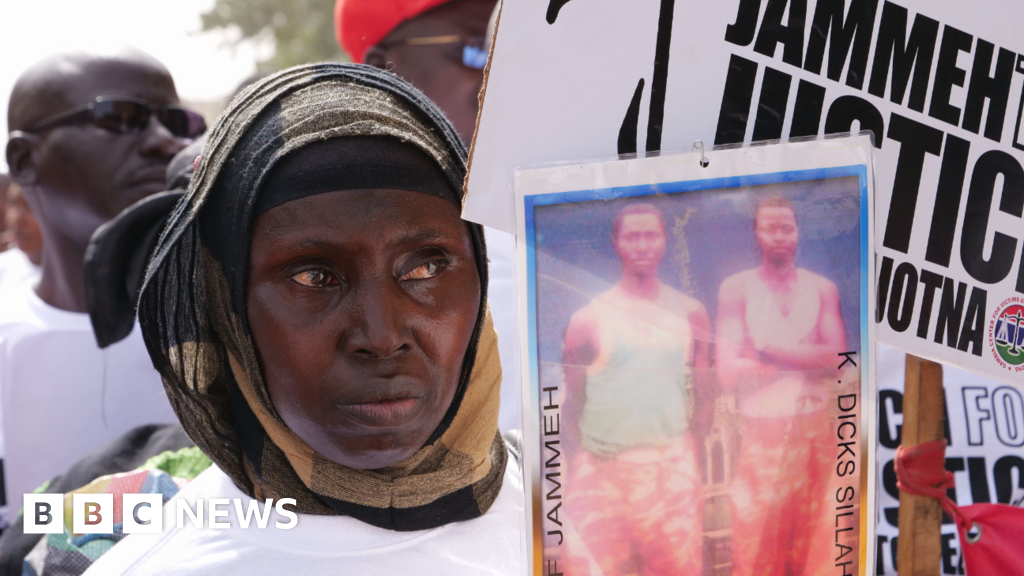
The Legacy of Autocracy: An Analytical Review of the Jammeh Administration’s Human Rights Record
The political history of The Gambia from 1994 to 2017 remains one of the most stark examples of democratic erosion and institutionalized state violence in West Africa. Following a bloodless coup d’état in 1994, Yahya Jammeh transitioned from a military officer to a civilian president, maintaining an iron grip on the nation for twenty-two years. While his administration frequently marketed itself through the lens of developmentalism and national sovereignty, the underlying reality was a sophisticated apparatus of repression characterized by systematic human rights violations. This report examines the structural mechanisms of power employed during the Jammeh era, focusing specifically on the orchestration of enforced disappearances and extrajudicial killings as tools of political survival and social control.
The Institutionalization of State Terror and the Role of the ‘Junglers’
Central to the maintenance of Jammeh’s authority was the creation of a shadow security architecture that bypassed traditional military and police hierarchies. The most notorious element of this structure was the “Junglers,” an elite paramilitary unit that answered directly to the presidency. Unlike standard security forces, the Junglers operated with total impunity, functioning as a specialized hit squad tasked with the neutralization of perceived threats to the regime. This unit was instrumental in the execution of extrajudicial killings, which were often carried out under the cover of darkness or in remote locations to minimize public scrutiny and forensic accountability.
From an organizational perspective, the Junglers represented a total subversion of the rule of law. Their operations were characterized by a complete absence of judicial oversight, warrant requirements, or documented procedures. Witnesses and former members testifying before the Truth, Reconciliation and Reparations Commission (TRRC) have since provided harrowing accounts of the logistics involved in these killings, revealing a deliberate strategy of psychological warfare intended to silence any form of opposition within the civil service, the media, and the military itself. By utilizing a small, fiercely loyal cadre of executioners, the administration successfully isolated the violence from the broader administrative functions of the state, allowing the presidency to maintain a veneer of legitimacy on the international stage while domestic dissent was effectively liquidated.
Systematic Enforced Disappearances as a Tool of Social Attrition
Beyond the finality of extrajudicial killings, the Jammeh administration utilized enforced disappearances as a more nuanced mechanism of control. Unlike public arrests, which create a focal point for advocacy and legal intervention, disappearances create a perpetual state of uncertainty and fear. In The Gambia, this tactic was applied systematically against journalists, human rights defenders, and even high-ranking government officials who showed signs of wavering loyalty. The “disappearance” of individuals served two primary functions: it removed the irritant from the political landscape and it served as a chilling warning to others without the political cost of a public trial or a confirmed death.
The economic and social impact of these disappearances was profound. Families were left in a state of legal and emotional limbo, unable to settle estates, claim benefits, or find closure. This state-sponsored attrition eroded the social fabric of the nation, as trust in public institutions,specifically the National Intelligence Agency (NIA)—collapsed. The NIA became synonymous with arbitrary detention and torture, operating a network of secret detention centers where individuals were held incommunicado for months or years. The systematic nature of these actions suggests they were not sporadic outbursts of violence, but rather a calculated policy designed to dismantle the capacity for collective action and critical discourse within Gambian society.
The Convergence of Political Repression and Economic Destabilization
The climate of fear established through enforced disappearances and killings had direct repercussions on the Gambian economy and its relationship with the global market. An environment characterized by the absence of the rule of law is inherently hostile to foreign direct investment (FDI) and sustainable business growth. During the Jammeh era, the blurring of lines between state interests and the President’s personal commercial ventures led to a predatory economic environment. Arbitrary arrests were frequently used as a precursor to the seizure of private assets or the intimidation of business rivals.
The international community’s response to these human rights abuses further isolated the Gambian economy. Sanctions, the withdrawal of development aid, and the suspension of trade preferences,such as those under the African Growth and Opportunity Act (AGOA)—were direct consequences of the regime’s record. This isolation necessitated an even greater reliance on unconventional and often illicit revenue streams, further entrenching the power of the security apparatus. The business community was forced to navigate a landscape where political patronage was the only protection against state-sanctioned violence or asset forfeiture, leading to significant capital flight and a “brain drain” of the nation’s professional class.
Concluding Analysis: The Path Toward Transitional Justice
The end of Yahya Jammeh’s rule in early 2017, following a contentious election and regional diplomatic intervention, opened a complex chapter of transitional justice. The subsequent findings of the TRRC have meticulously documented the scale of the atrocities, providing a comprehensive record that corroborates decades of allegations regarding enforced disappearances and extrajudicial killings. For the business community and political analysts, the Gambian case serves as a critical study in sovereign risk; it demonstrates how the dismantling of human rights protections inevitably leads to institutional decay and economic fragility.
Moving forward, the challenge for The Gambia lies in the implementation of the TRRC’s recommendations and the pursuit of legal accountability. The legacy of a twenty-two-year autocracy cannot be dismantled solely through the publication of reports. It requires a fundamental restructuring of the security sector, the reinforcement of judicial independence, and the establishment of a robust framework to prevent the recurrence of state-sponsored violence. The pursuit of justice for the victims of enforced disappearances and killings remains a prerequisite for national reconciliation and for restoring the international credibility necessary for long-term economic revitalisation. The Gambian experience underscores that sustainable development is inextricably linked to the protection of fundamental human rights and the absolute adherence to the rule of law.





