







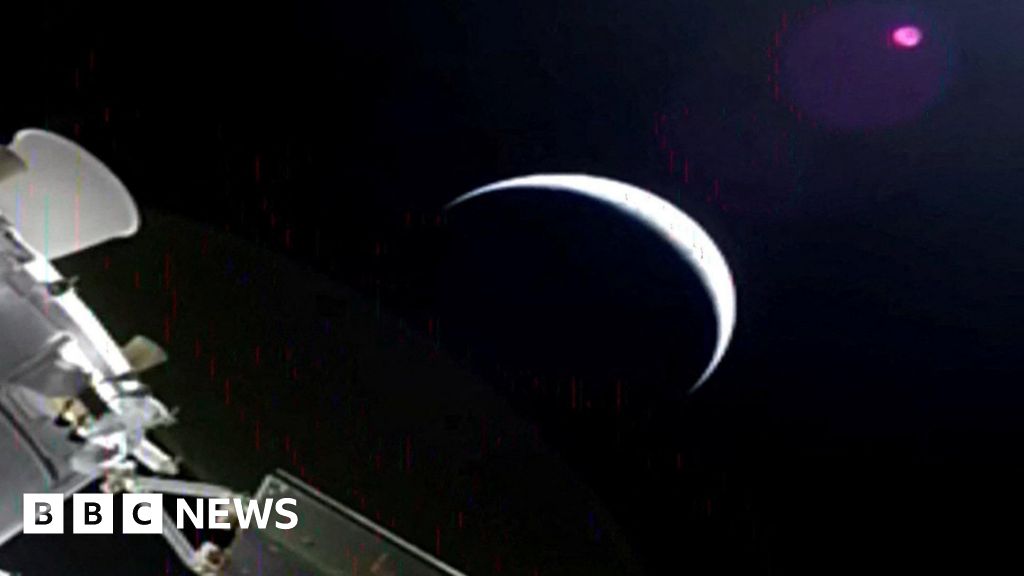
Strategic Contingency Planning in Deep Space: The 36-Hour Return Threshold for Orion
In the high-stakes arena of lunar exploration, the margin for error is measured in seconds and meters, yet the strategies for crew survival must be robust enough to span the vast distance between Earth and its natural satellite. As the Artemis program advances the capabilities of the Orion Multi-Purpose Crew Vehicle (MPCV), the technical protocols governing abort scenarios have become a cornerstone of mission architecture. Central to this safety framework is the Trans-Lunar Injection (TLI)—the critical engine burn that propels the spacecraft out of Earth’s orbit and toward the Moon. However, the period immediately following this maneuver presents a complex decision-making matrix for mission controllers and program managers.
The operational philosophy for Orion emphasizes a dual-path recovery strategy based on elapsed mission time and orbital dynamics. For the first 36 hours following TLI, the preferred method of emergency return is a high-energy “U-turn” maneuver. Beyond this window, the physics of deep-space travel dictate a shift in strategy, favoring a circumlunar return that leverages the Moon’s gravitational pull. This strategic bifurcation, as outlined by Orion program leadership, highlights the delicate balance between propulsion reserves, crew life-support durations, and the inescapable laws of celestial mechanics.
The Mechanics of the Direct Abort: The 36-Hour Window
The initial 36 hours after the Trans-Lunar Injection represent a period where the spacecraft still maintains a relatively close proximity to Earth and possesses the requisite velocity vectors to make a direct reversal feasible. In this phase, a “U-turn”—formally known as a direct abort,utilizes the Orion Service Module’s primary propulsion system to cancel out the forward momentum and initiate a trajectory that leads directly back into the Earth’s atmosphere. This maneuver is prioritized for time-sensitive emergencies, such as a localized fire, a significant breach in the pressure vessel, or a critical failure in the life-support systems that would not allow the crew to survive a multi-day journey around the Moon.

Executing a direct abort is a resource-intensive operation. It requires a massive expenditure of propellant to overcome the inertia generated during the TLI burn. However, from a risk-management perspective, the speed of the return is the primary metric of success. During this early stage of flight, the spacecraft is moving at approximately 25,000 miles per hour; reversing this direction requires precision timing and an engine that can withstand the thermal and structural stresses of a sustained burn. This “fastest way home” protocol is the first line of defense in the event of a catastrophic system failure that mandates an immediate cessation of the mission objectives.
Transitioning to Circumlunar Recovery: Efficiency Over Speed
As the Orion spacecraft crosses the 36-hour threshold, the energy requirements for a direct U-turn become prohibitively high. At this distance, the fuel mass required to stop the spacecraft’s forward progress and accelerate it back toward Earth exceeds the capacity of the European Service Module (ESM). Consequently, the mission profile shifts to a “Free-Return Trajectory” or a circumlunar abort. In this scenario, it is mathematically more efficient,and often simpler from a navigational standpoint,to continue toward the Moon, utilize its gravity to whip the spacecraft around the far side, and let orbital mechanics “fall” the vehicle back toward Earth.
The advantage of the circumlunar return lies in its conservation of delta-v (the change in velocity). Rather than fighting the existing momentum, the crew utilizes the spacecraft’s current path to their advantage. While this route may take longer in terms of total hours, it ensures that the vehicle retains enough fuel for course corrections and the critical entry-interface maneuvers required for a safe splashdown. Program managers, including Orion manager Howard Hu, emphasize that after the 36-hour mark, attempting to fight the spacecraft’s natural trajectory would introduce more risk than the delay of a lunar flyby. This approach treats the Moon not as a destination, but as a gravitational anchor used to pivot the spacecraft back toward the safety of the terrestrial atmosphere.
Strategic Resilience and Programmatic Oversight
The design and implementation of these abort protocols are indicative of a mature aerospace program that prioritizes programmatic resilience. The leadership at the Orion program has overseen the development of redundant systems that can handle the transition between these two very different return profiles. This level of planning is not merely about mechanical hardware; it involves the integration of ground-based tracking, real-time telemetry analysis, and the psychological readiness of the crew to pivot from a mission of discovery to a mission of survival.
From a business and management perspective, the transparency regarding these emergency procedures builds critical stakeholder confidence. By publicly defining the 36-hour threshold, program leaders demonstrate a rigorous understanding of the mission’s technical constraints. This clarity allows for better resource allocation, as engineers can optimize the Orion’s propulsion and thermal protection systems specifically for these high-energy return scenarios. The “stay on course” philosophy after the 36-hour mark also reduces the cognitive load on mission controllers, providing a clear, simplified path forward when complex variables are at their peak.
Concluding Analysis: The Logic of Deep Space Navigation
The operational directives for the Orion spacecraft underscore a fundamental truth of deep-space exploration: simplicity is often the ultimate form of safety. While the “U-turn” represents a brute-force solution to an immediate crisis, the shift to a circumlunar return demonstrates a sophisticated reliance on the physics of the solar system. The 36-hour window is more than just a chronological marker; it is a transition point between two different philosophies of flight,one dictated by the power of the engine and the other by the power of gravity.
As humanity prepares to return to the Moon and eventually push toward Mars, these protocols will serve as the template for all future deep-space transit. The ability to distinguish between when to fight the environment and when to use it to one’s advantage is the hallmark of expert mission management. Orion’s contingency architecture ensures that regardless of the failure point, there is a mathematically sound, fuel-efficient, and survivable path back to Earth. This strategic foresight remains the most vital component of the spacecraft’s design, ensuring that the quest for discovery never compromises the ultimate goal of crew safety.




