







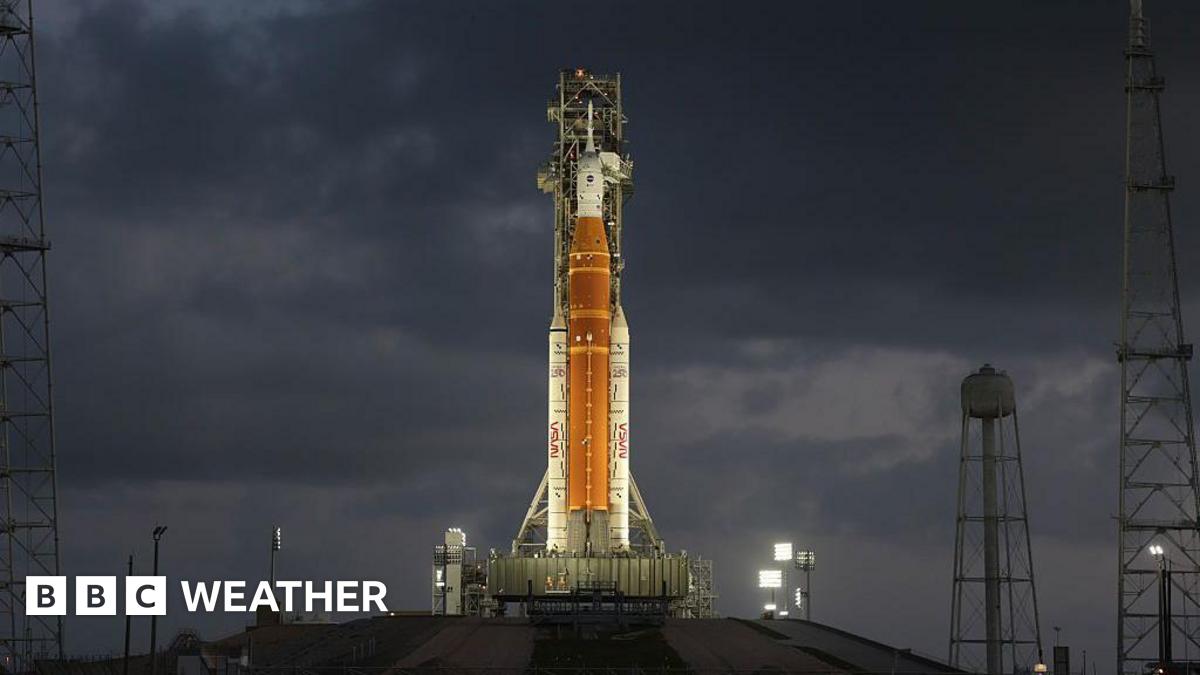
The Critical Intersections of Atmospheric Meteorology and Aerospace Launch Integrity
In the high-stakes arena of aerospace operations, the margin for error is non-existent. While the engineering of propulsion systems and orbital mechanics often garners the most public attention, the most volatile variable in any launch sequence remains the Earth’s atmosphere. The determination of whether a multi-billion dollar mission proceeds or remains grounded rests upon a rigorous set of parameters known as Launch Commit Criteria (LCC). These rules are not merely guidelines but are stringent safety protocols designed to mitigate the profound risks posed by meteorological phenomena. Understanding the complexities of atmospheric electricity, cloud formation, and the physics of rocket-induced lightning is essential for ensuring the survival of both the vehicle and its payload.
The operational environment for a rocket launch extends far beyond the launch pad; it encompasses a vertical corridor stretching through the various layers of the atmosphere. Within this corridor, the presence of specific cloud types and electrical disturbances can transform a routine ascent into a catastrophic failure. Consequently, the role of specialized meteorological oversight has become a cornerstone of modern spaceflight, blending historical climatological data with real-time sensory inputs to navigate the “percentage chance of violation” that defines the window of opportunity for every mission.
Meteorological Constraints and the Classification of Disturbed Weather
The criteria governing a launch window are heavily influenced by the presence of “disturbed weather,” a broad term that encompasses everything from high-velocity surface winds to specific cloud formations. Launch weather officers (LWOs) are tasked with identifying cumulus clouds and other convective structures that signal atmospheric instability. Unlike standard civil aviation, which can often navigate around localized weather systems, a vertical launch vehicle must pass directly through these layers, exposing its structure to varying pressure differentials and electrical potential.
Cumulus clouds, while often appearing benign to the casual observer, are indicators of convective activity. When these clouds grow into more significant formations, they can harbor massive amounts of energy. The meteorologist’s task is to quantify this energy using a combination of radar, satellite imagery, and local sensors. By analyzing the “probability of violation,” experts determine whether the atmospheric conditions meet the threshold for a safe flight. This probability is not a simple weather forecast; it is a sophisticated risk assessment that incorporates local knowledge of coastal patterns,especially in launch-heavy regions like Florida’s Space Coast,and historical climatological trends. A violation of even one parameter, such as the thickness of a cloud layer or the proximity of a storm front, results in an immediate scrub of the mission to preserve the integrity of the aerospace assets.
The Physics of Rocket-Induced Lightning and Atmospheric Electrification
Perhaps the most insidious threat to a launch vehicle is not natural lightning,which can be tracked and avoided,but rather rocket-induced lightning. The atmosphere maintains an ambient electric field, which under normal conditions remains balanced. However, certain types of clouds can carry a high electrical charge even if they are not actively producing thunder or visible strikes. When a rocket ascends through these charged layers, it does not merely pass through them; it fundamentally alters the local electrical environment.
A rocket moving at high speeds acts as a massive electrical conductor. This effect is compounded by the exhaust plume,a long, trailing column of ionized gas that is highly conductive. In essence, the vehicle and its exhaust trail function as a giant mobile lightning rod. This “lightning rod effect” can trigger a strike from a cloud that would otherwise have remained dormant. Research indicates that rocket-induced lightning can be triggered in atmospheric electric fields that are significantly weaker than those required for natural lightning. This phenomenon poses a direct threat to the vehicle’s sensitive avionics and flight control systems. A single strike can induce electromagnetic interference (EMI) that disrupts internal communications or, in extreme cases, causes physical damage to the hull or the payload, leading to a loss of mission.
Operational Risk Mitigation and the Expertise of Weather Officers
Managing these risks requires a sophisticated infrastructure of data and human expertise. Launch weather officers utilize a “rules-based” system that leaves little room for ambiguity. These rules specifically address atmospheric electricity, cloud temperature, and the presence of “anvil” clouds which can spread electrical charges dozens of miles away from a storm center. The decision-making process is an exercise in predictive modeling: the LWO must forecast the probability that a violation will occur at the exact moment of ignition and during the subsequent minutes of the ascent phase.
This expertise is grounded in “local knowledge,” a critical component that cannot be fully replicated by automated systems. Weather patterns at major launch sites are often hyper-localized, influenced by the interaction of sea breezes and thermal gradients. The ability of an experienced LWO to interpret subtle shifts in these patterns allows for more precise launch windows, potentially saving millions of dollars in costs associated with unnecessary delays. By integrating meteorological data with the physical properties of the rocket,such as its speed and the chemical composition of its exhaust,mission controllers can navigate the fine line between operational efficiency and necessary caution.
Concluding Analysis: The Strategic Importance of Weather Mastery
As the global space industry transitions into an era of higher launch frequencies and commercial competition, the mastery of atmospheric constraints has become a strategic asset. The ability to accurately predict and manage weather-related risks is directly tied to the economic viability of space programs. Every launch scrub due to weather carries a heavy price tag, involving the recycling of fuel, the reallocation of personnel, and the delay of critical satellite deployments or crewed missions.
In conclusion, the intersection of meteorology and aerospace engineering is a field defined by the management of invisible forces. The threat of rocket-induced lightning serves as a potent reminder that humans do not simply “conquer” the atmosphere; rather, we must operate within its strict physical laws. The continued evolution of lightning-detection technology and atmospheric modeling will be essential as we push toward more frequent launches. Ultimately, the authority of the weather officer remains the final word in launch operations, ensuring that the drive for progress never supersedes the fundamental requirement for safety and technical integrity in the face of nature’s volatility.





