







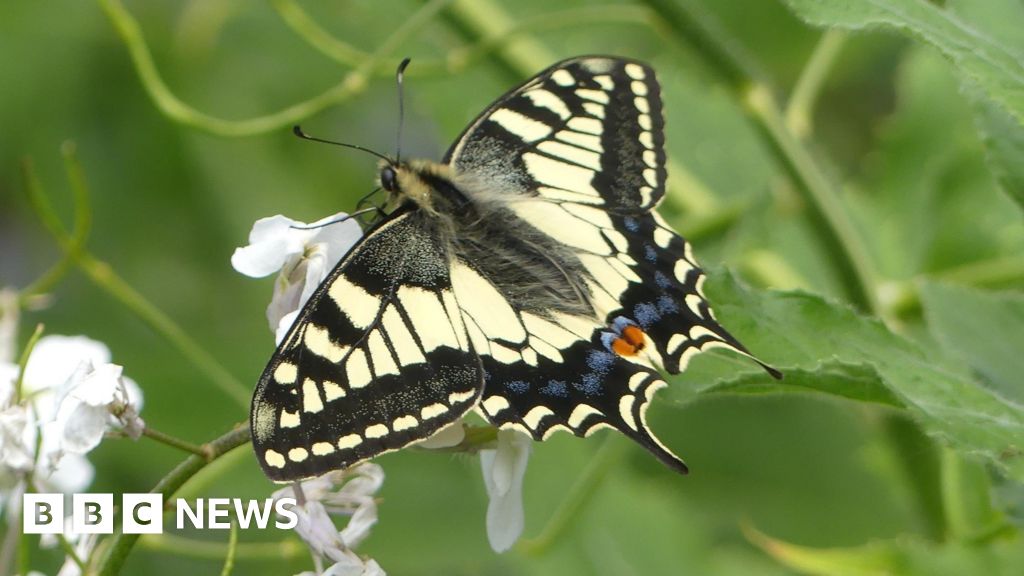
The Resurgence of the Swallowtail: A Milestone in British Ecological Restoration
The ecological landscape of the United Kingdom is currently undergoing a transformative shift as conservationists and land management experts witness the potential return of one of the nation’s most iconic and elusive species. The Swallowtail butterfly (Papilio machaon britannicus), the largest native butterfly in the UK, has been conspicuously absent from many of its historical territories for more than a century. Once a staple of the vast, untamed marshlands across Southern and Eastern England, the species saw a dramatic decline due to industrial-scale drainage, habitat fragmentation, and the subsequent loss of its highly specialized food source. Today, however, a series of strategic reintroduction programs and large-scale fenland restoration projects are signaling a new era for British biodiversity, positioning the Swallowtail as a flagship species for the “nature-positive” movement.
The significance of the Swallowtail extends beyond mere aesthetic appeal; it serves as a critical indicator species for the health of wetland ecosystems. Its historical disappearance was not an isolated event but rather a symptom of the systematic degradation of the UK’s peatlands and fens,ecosystems that are vital for carbon sequestration and flood mitigation. The current efforts to return this apex lepidoptera to its former range represent a sophisticated intersection of environmental science, long-term land management strategy, and cross-sector collaboration between private landowners and public conservation bodies.

Habitat Remediation and the Vitality of Peucedanum Palustre
The primary barrier to the Swallowtail’s survival over the last hundred years has been its extreme dietary specialization. In its larval stage, the British subspecies of the Swallowtail feeds exclusively on Milk-parsley (Peucedanum palustre), an umbellifer that thrives only in specific, nutrient-poor fenland conditions. The drainage of the Fens for agricultural use during the 19th and early 20th centuries led to a catastrophic decline in Milk-parsley populations, effectively starving the Swallowtail out of existence in regions outside of the Norfolk Broads.
Professional restoration efforts are now focused on “rewetting” significant tracts of land to recreate the necessary hydrological conditions for Milk-parsley to flourish. This involves sophisticated water-table management and the removal of invasive scrub that would otherwise outcompete native wetland flora. For a reintroduction to be deemed commercially and ecologically viable, the host environment must support a self-sustaining population of Milk-parsley that can withstand natural fluctuations in climate. Strategic land management now utilizes high-resolution mapping and soil analysis to identify “corridors” of suitable habitat, ensuring that the reintroduced butterfly populations are not isolated but can move and interbreed, thereby maintaining genetic diversity.
Strategic Methodologies in Species Translocation
Reintroducing a species after a century-long hiatus is a complex logistical and scientific undertaking. It requires more than simply releasing captive-bred individuals into the wild. Expert practitioners utilize a framework known as “soft release,” where butterflies are introduced into controlled environments within their new habitat to allow for acclimatization. This process is supported by rigorous genetic screening to ensure that the founder populations possess the resilience required to survive the increasingly unpredictable British weather patterns.
Furthermore, the timing of these reintroductions is coordinated with the broader seasonal cycles of the fenland. Conservationists must ensure that the emergence of adult butterflies coincides with the peak flowering of nectar sources, while the subsequent egg-laying must align with the optimal growth stage of the Milk-parsley. Modern monitoring techniques, including the use of environmental DNA (eDNA) and citizen-science data collection, allow researchers to track the success of these translocations in real-time. By treating the reintroduction as a high-stakes infrastructure project, stakeholders can apply rigorous KPIs (Key Performance Indicators) to measure success, such as larval survival rates and the colonization of adjacent land parcels.
Economic Implications and the Nature-Positive Economy
The return of the Swallowtail is increasingly viewed through the lens of the burgeoning “green economy.” As businesses and government entities move toward mandatory biodiversity net gain (BNG) requirements, the restoration of high-value habitats like fens provides a tangible asset for environmental accounting. The presence of the Swallowtail acts as a biological “quality seal,” demonstrating that a particular landscape is managed to the highest ecological standards. This, in turn, enhances the value of the land for carbon offsetting and ecosystem service markets.
Beyond the technical financial metrics, there is a significant socio-economic benefit rooted in ecotourism. The Swallowtail is a “charismatic megafauna” of the insect world, capable of drawing thousands of enthusiasts and tourists to rural areas. For regional economies, the presence of such a rare and spectacular species can drive revenue for local hospitality and service sectors. When managed correctly, this “nature-based tourism” creates a virtuous cycle: the economic value generated by the butterfly provides the necessary capital for continued habitat maintenance, ensuring that the species remains protected for future generations.
Concluding Analysis: A Model for Future Conservation
The potential recovery of the Swallowtail butterfly after a century of absence is a testament to the efficacy of targeted, science-led environmental intervention. It proves that ecological trends are not irreversible and that with sufficient investment and strategic planning, lost biodiversity can be reclaimed. However, the long-term success of this initiative remains contingent upon a stabilized climate and the continued commitment of land managers to maintain the delicate balance of the UK’s wetland ecosystems.
As we move further into a decade defined by the dual crises of climate change and biodiversity loss, the Swallowtail reintroduction serves as a blueprint for future projects. It highlights the necessity of focusing on “specialist” species to drive “generalist” habitat health. If the UK can successfully reintegrate its largest butterfly into the landscape, it demonstrates a sophisticated capability to manage complex natural systems,a skill set that will be indispensable as we seek to build a resilient, sustainable future. The return of this species is not merely a nostalgic nod to the past, but a forward-looking investment in the robustness of the British environment.




