







The Great Academic Imbalance: Analyzing India’s Higher Education Supply-Demand Gap
The landscape of Indian secondary education is currently defined by a staggering statistical disparity that carries profound implications for global labor markets and international higher education. Each year, approximately eleven million students conclude their Grade 12 studies, marking the culmination of their primary and secondary schooling. Within this massive cohort exists an elite stratum of high achievers,roughly 1.5 to 1.7 million students,who represent the pinnacle of academic merit within the nation. However, the domestic institutional infrastructure remains fundamentally unable to absorb this volume of talent. With India’s premier institutions offering only an estimated 200,000 seats annually, a structural vacuum has emerged, forcing over a million high-caliber students to seek alternative pathways for their professional development.
This systemic mismatch is not merely a localized administrative hurdle; it is a significant economic phenomenon. The gap between student aspirations and domestic capacity has transformed India into the world’s most critical exporter of intellectual capital. As domestic competition reaches a state of hyper-saturation, the resulting “overflow” of top-tier talent provides a primary growth engine for international universities and global economies. To understand the future of global workforce development, one must first analyze the mechanics of this capacity crunch and the strategic pivot toward internationalization.
The Domestic Capacity Crunch and the Stratification of Merit
The core of India’s educational challenge lies in the extreme stratification of its higher education sector. While the country boasts thousands of colleges, the market value of a degree is heavily weighted toward a tiny fraction of “Tier 1” institutions, such as the Indian Institutes of Technology (IITs), the Indian Institutes of Management (IIMs), and a select group of prestigious central universities. For the 1.5 to 1.7 million students who fall within the top academic bracket, these institutions represent the only domestic route to high-status employment and global mobility.
When only 200,000 seats are available for a pool of nearly two million qualified candidates, the acceptance rate effectively falls below many of the world’s most exclusive Ivy League institutions. This creates a hyper-competitive environment where even students scoring in the 95th percentile often find themselves excluded from the nation’s top colleges. This “meritocratic surplus” consists of students who possess the cognitive ability, financial resources, and professional ambition to succeed at the highest levels but are denied entry simply due to a lack of physical and institutional “seats.” This surplus is the primary demographic driving the current surge in outward student mobility.
Strategic Drivers of International Student Outflow
For foreign higher education institutions, the Indian market is no longer an optional frontier but a strategic necessity. The inability of the Indian state to scale its elite infrastructure at the same rate as its demographic growth has created a lucrative opportunity for global educators. Organizations that facilitate the entry of foreign universities into the Indian market are seeing unprecedented interest as these institutions seek to capture the “rejected” elite of the Indian system.
The drivers of this outflow are twofold: institutional prestige and post-study career outcomes. Indian families increasingly view international education as a viable,and often superior,alternative to the domestic “rat race.” Countries like the United States, the United Kingdom, Canada, and Australia have traditionally been the beneficiaries of this trend. However, we are now observing a diversification of destinations as students prioritize Return on Investment (ROI) and favorable immigration policies. The migration of 1.3 million plus high-achieving students is not a sign of domestic failure alone; it is a calculated economic decision by the Indian middle class to diversify their human capital assets across borders.
The Role of Transnational Education and Market Entry
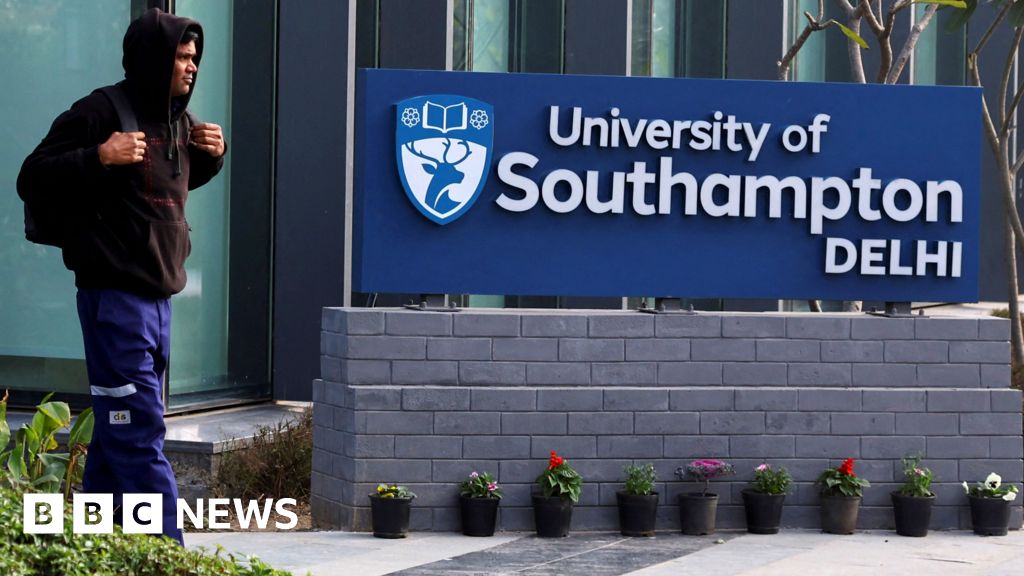
As the disparity between graduates and available seats persists, the nature of international engagement is evolving. We are moving beyond simple recruitment toward a model of Transnational Education (TNE). Foreign universities are increasingly looking to establish a physical presence within India,through branch campuses, twinning programs, and dual-degree partnerships,to capture the segment of the 1.5 million students who may not have the means or desire to relocate fully but still require global-standard accreditation.

The regulatory environment in India, particularly through the National Education Policy (NEP) 2020, has begun to acknowledge this necessity by easing the path for foreign players. By allowing global institutions to operate within special zones like the Gujarat International Finance Tec-City (GIFT City) or through local partnerships, the Indian government is attempting to mitigate the “brain drain” by bringing international excellence to domestic soil. For global stakeholders, the challenge is no longer about finding students, but about navigating the complex regulatory and cultural landscape to provide a product that resonates with the specific professional aspirations of the Indian elite.
Concluding Analysis: A Structural Imperative for Global Integration
The data provided by industry experts underscores a fundamental reality: India’s domestic education system is currently a bottleneck for its own national potential. The “top-bracket” surplus of over one million students represents one of the largest concentrations of untapped human capital in modern history. From a business perspective, this represents a sustained, high-demand market that is remarkably resilient to economic fluctuations, as Indian families prioritize education spending above almost all other discretionary costs.
In the long term, the resolution of this imbalance will likely require a multi-pronged approach involving massive domestic infrastructure investment, the expansion of the private university sector, and deeper integration with global educational networks. Until the domestic capacity for excellence can match the scale of the Indian student population, the “educational overflow” will continue to be a defining feature of the global knowledge economy. For international universities and corporate recruiters, the 1.5 million students outside the 200,000-seat domestic threshold represent the most significant talent acquisition opportunity of the twenty-first century. The institutions that successfully build bridges to this cohort will define the next era of global intellectual and economic leadership.




