







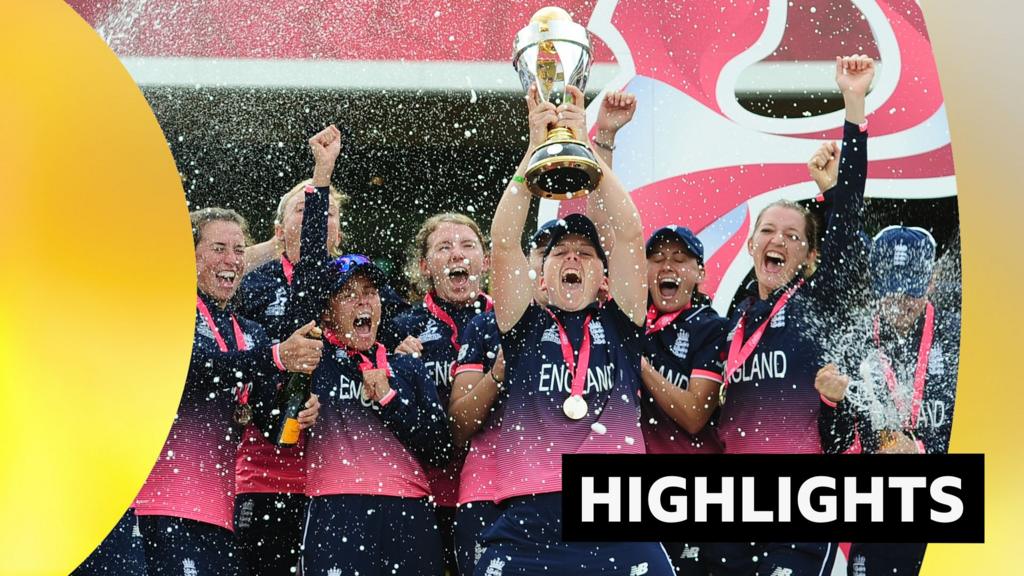
The Watershed Moment: Analyzing the Strategic Impact of England’s 2017 World Cup Triumph
The 2017 ICC Women’s Cricket World Cup final, held at the historic Lord’s Cricket Ground, remains a definitive case study in the evolution of professional women’s sports. While the scorecard reflects a narrow nine-run victory for England over India, the broader implications of the match transcended the immediate sporting result. It represented a fundamental paradigm shift in the commercial viability, media visibility, and professional standards of the women’s game. This report examines the technical execution, the commercial surge, and the long-term strategic legacy of that afternoon in July, providing an analytical perspective on why this specific event continues to serve as a benchmark for the upcoming T20 World Cup cycles.
Tactical Resilience and the Anatomy of the Nine-Run Margin
From a technical standpoint, the final was a masterclass in psychological resilience and tactical adaptability. England, having opted to bat first, navigated a disciplined Indian bowling attack to post a total of 228 for 7. The innings was characterized by steady, if not explosive, contributions from Natalie Sciver (51) and Sarah Taylor (45). At that juncture, the match hung in a precarious balance; a total of 228 was competitive but far from insurmountable on a Lord’s pitch that historically rewards patient accumulation.
The Indian response, led by Punam Raut’s 86 and a characteristic half-century from Harmanpreet Kaur, placed the visitors in a commanding position at 191 for 3. It was here that the tactical acumen of the English side and the pressure of the occasion converged. The subsequent collapse,where India lost seven wickets for a mere 28 runs,was not merely a result of individual errors but a testament to England’s sustained operational pressure. Anya Shrubsole’s performance, yielding figures of 6 for 46, serves as a quintessential example of high-stakes execution. Her ability to exploit the psychological “tipping point” of a major final demonstrated the necessity of mental fortitude in the professional era. For analysts, this match highlighted that the gap between victory and defeat in elite women’s cricket was no longer a matter of raw talent alone, but of clinical precision under global scrutiny.
Commercial Expansion and the Professionalization Benchmark
The 2017 final acted as a catalyst for a significant influx of corporate investment and a restructuring of the sport’s financial model. Prior to this tournament, women’s cricket often struggled with a perception of being a “secondary” product. However, the sold-out crowd of over 26,000 at Lord’s,the “Home of Cricket”—provided irrefutable evidence of market demand. This event proved that women’s cricket could command a premium live audience, which in turn unlocked higher-tier sponsorship opportunities and increased broadcast valuation.
Following the 2017 victory, the England and Wales Cricket Board (ECB) and other global governing bodies were forced to accelerate their professionalization roadmaps. The success of the tournament validated the business case for full-time professional contracts, which have since become the standard across major cricketing nations. The ROI for sponsors became clearer as the tournament generated record-breaking digital engagement, proving that the female demographic was an underserved but highly engaged market. This commercial awakening set the stage for the subsequent launch of high-profile domestic leagues like the Women’s Premier League (WPL) and The Hundred, which have since redefined the fiscal landscape of the sport.
Global Media Integration and Brand Elevation
The strategic deployment of media and broadcasting during the 2017 World Cup was a pivot point in how women’s sports are packaged for consumption. The ICC’s commitment to broadcasting every match live was a significant logistical undertaking that paid substantial dividends. The final attracted a global television audience estimated at 180 million, a figure that shattered previous records and placed the women’s game on par with major international men’s sporting events in terms of reach.
Moreover, the narrative surrounding the 2017 final was expertly managed to elevate the individual brands of the players. Names like Heather Knight and Mithali Raj became household figures, moving beyond the niche circles of cricket enthusiasts into the mainstream cultural consciousness. The use of social media as a tool for real-time engagement and storytelling allowed the ICC to build a “fan-first” ecosystem. This visibility has had a compounding effect on the sport’s infrastructure; increased media coverage leads to higher participation rates at the grassroots level, which eventually expands the talent pool for professional leagues. The 2017 final was, in essence, the global “product launch” that the sport required to move from the periphery to the center of the sporting industry.
Concluding Analysis: The Legacy of Lord’s 2017
In conclusion, the 2017 victory was far more than a statistical entry in England’s trophy cabinet; it was the architectural foundation for the current era of women’s cricket. The nine-run victory over India proved that the women’s game possessed the necessary drama, skill, and marketability to thrive as a standalone commercial entity. As the cricketing world prepares for the next T20 World Cup, the lessons of 2017 remain highly relevant.
The success of that final demonstrated that when high-quality athletes are given a premium stage, world-class broadcast support, and professional financial backing, the result is a product that resonates globally. For stakeholders and investors, 2017 remains the primary evidence that women’s sport is not just a social imperative but a high-growth asset class. The enduring legacy of England’s triumph is found in the increased competitiveness of the global game, the rising valuations of media rights, and the inspiration of a new generation of cricketers who no longer see Lord’s as an unreachable summit, but as a standard proving ground for excellence.





