







The Great Academic Bottleneck: Analyzing India’s Higher Education Supply-Demand Imbalance
India’s educational landscape is currently defined by a profound and widening chasm between the aspirations of its youth and the institutional capacity of its premier academic infrastructure. As the nation positions itself as a global talent hub, the structural limitations of its domestic university system have come into sharp focus. Each year, approximately 11 million students complete their Grade 12 examinations, marking the culmination of their primary and secondary schooling. However, this massive influx of human capital encounters a severe systemic constriction at the tertiary level. While a significant portion of these students,roughly 1.5 to 1.7 million,fall within the highest academic performance brackets, the domestic capacity for elite higher education remains remarkably stagnant.
The core of the crisis lies in the fact that India’s top-tier institutions, including the Indian Institutes of Technology (IITs), the Indian Institutes of Management (IIMs), and prestigious central universities, possess a collective annual intake capacity of only about 200,000 students. This creates a high-stakes environment where even the most exceptional academic achievers are frequently denied entry into the institutions best equipped to foster their talents. The following report examines the economic implications of this bottleneck, the burgeoning market for international education providers, and the long-term strategic challenges facing the Indian state in reconciling its demographic dividend with its educational output.
The Disparity of Scale: Quantifying the Academic Bottleneck
The statistics provided by industry experts, including Aritra Ghosal of OneStep Global, highlight a staggering supply-demand equilibrium failure. When only 1.8% of the total graduating cohort,and less than 13% of the top-performing academic segment,can secure a seat in a premier domestic institution, the resulting competition transcends healthy academic rigor and enters the realm of systemic exclusion. This scarcity of “elite” seats has created a high-pressure ecosystem where performance is measured by razor-thin margins in standardized entrance examinations, often overlooking broader intellectual potential or specialized skills.

For the 1.3 to 1.5 million high-achieving students who fail to secure a spot in the top 200,000 domestic seats, the options are often fragmented. They must either settle for “Tier-2” or “Tier-3” institutions, which may lack the global accreditation, placement networks, and research facilities of their elite counterparts, or they must look beyond national borders. This demographic represents a critical “lost middle” for the Indian domestic economy,students who possess the intellectual aptitude for leadership and innovation but are forced into academic pathways that may not optimize their potential. The social cost of this bottleneck is reflected in the burgeoning “coaching industry,” a multi-billion dollar shadow education sector that prioritizes test-taking efficiency over holistic learning.
Market Dynamics and the Rise of Global Education Arbitrage
The persistent shortage of domestic seats has transformed India into the most significant “feeder market” for international higher education. Foreign universities, particularly those in the United Kingdom, Australia, Canada, and the United States, have recognized that India’s excess academic demand is a lucrative opportunity. No longer is studying abroad a luxury reserved for the ultra-wealthy; it has become a strategic necessity for the upper-middle class seeking to bypass the domestic bottleneck. For institutions in the Global North, these 1.5 million high-achievers represent a sustainable revenue stream and a source of high-quality research talent.
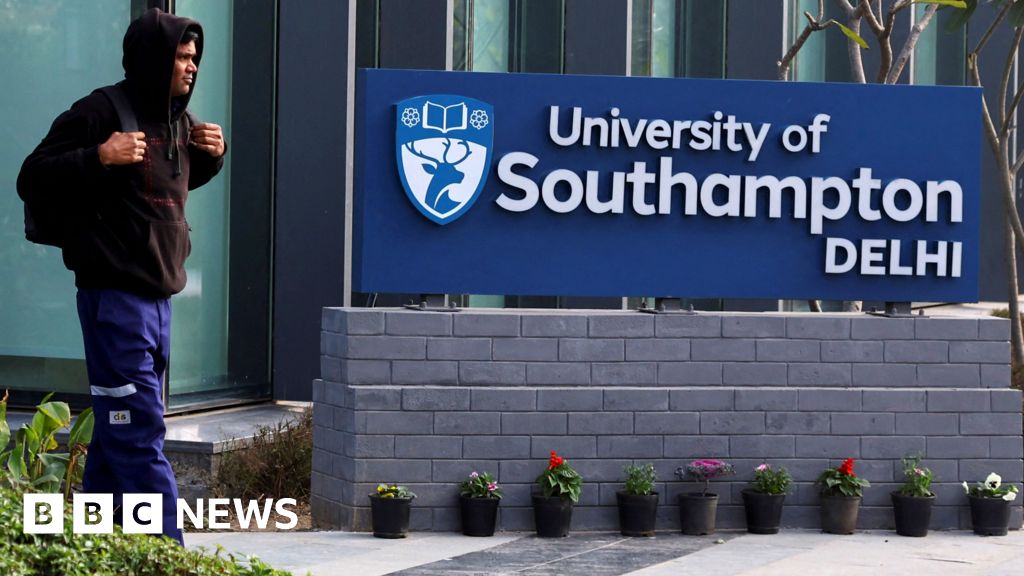
Consultancy firms and market entry specialists, such as OneStep Global, have emerged as vital intermediaries in this ecosystem. Their role is to bridge the gap between foreign institutional supply and Indian student demand. By facilitating partnerships, offshore campuses, and recruitment drives, these entities are capitalizing on a structural flaw in the Indian state’s educational planning. Furthermore, recent regulatory shifts in India,such as the National Education Policy (NEP) 2020,have begun to acknowledge this reality by allowing foreign universities to establish branch campuses in specialized zones like GIFT City. This move toward “internationalization at home” is an attempt to capture some of the capital and talent that would otherwise exit the country, though it remains in its nascent stages and currently lacks the scale to address the 1.5 million-student surplus.
Infrastructure vs. Aspiration: The Challenge of Rapid Scaling
The fundamental challenge for Indian policymakers is the sheer speed at which academic aspirations have outpaced physical and intellectual infrastructure. While the government has significantly increased the number of IITs and IIMs over the last two decades, the expansion has often struggled to maintain the “brand value” and quality of the original legacy campuses. Building a world-class institution requires more than just capital expenditure on buildings; it requires a deep bench of qualified faculty, a culture of research excellence, and strong industrial linkages,all of which take decades to cultivate.
Moreover, the focus on “elite” institutions has often come at the expense of vocational and technical training. The 11 million students graduating annually do not all require,or desire,a traditional four-year academic degree. However, in the absence of a robust, high-status vocational track, the pressure remains concentrated on the few available university seats. This creates a paradoxical situation where India faces high levels of graduate unemployment and underemployment alongside a desperate shortage of skilled labor in technical sectors. The inability to scale high-quality education at the same rate as the population growth has created a “waiting room” effect, where millions of youth remain in a state of suspended animation, pursuing multiple degrees or preparing for competitive exams for years on end.
Concluding Analysis: Strategic Implications for the Indian Economy
The data underscores a critical inflection point for India’s economic trajectory. The mismatch between 11 million annual graduates and a mere 200,000 top-tier seats is not merely an educational hurdle; it is a macroeconomic risk. If the nation cannot provide adequate pathways for its top 1.5 million students, it faces a dual threat: a persistent “brain drain” of its most capable minds and a growing sense of social discontent among a highly educated but under-leveraged youth population.
To mitigate this, India must move beyond the binary of “domestic elite” vs. “foreign education.” A multi-pronged strategy is required: first, the aggressive expansion of existing premier institutions through digital and hybrid models; second, the rapid implementation of the NEP 2020 to allow foreign competition to raise the floor of domestic education quality; and third, a cultural and economic shift that validates diverse career pathways outside of the traditional engineering and management silos. The 1.5 million students currently left behind by the domestic system represent the potential vanguard of India’s future economy. Failing to provide them with institutional homes,either through domestic expansion or integrated international partnerships,will result in one of the greatest missed opportunities in modern economic history. The “bottleneck” must be broken, not merely managed, if India is to truly realize its potential as a global knowledge superpower.




