







The Evolution of American Soccer: Socioeconomic Barriers and the Strategic Road to Global Integration
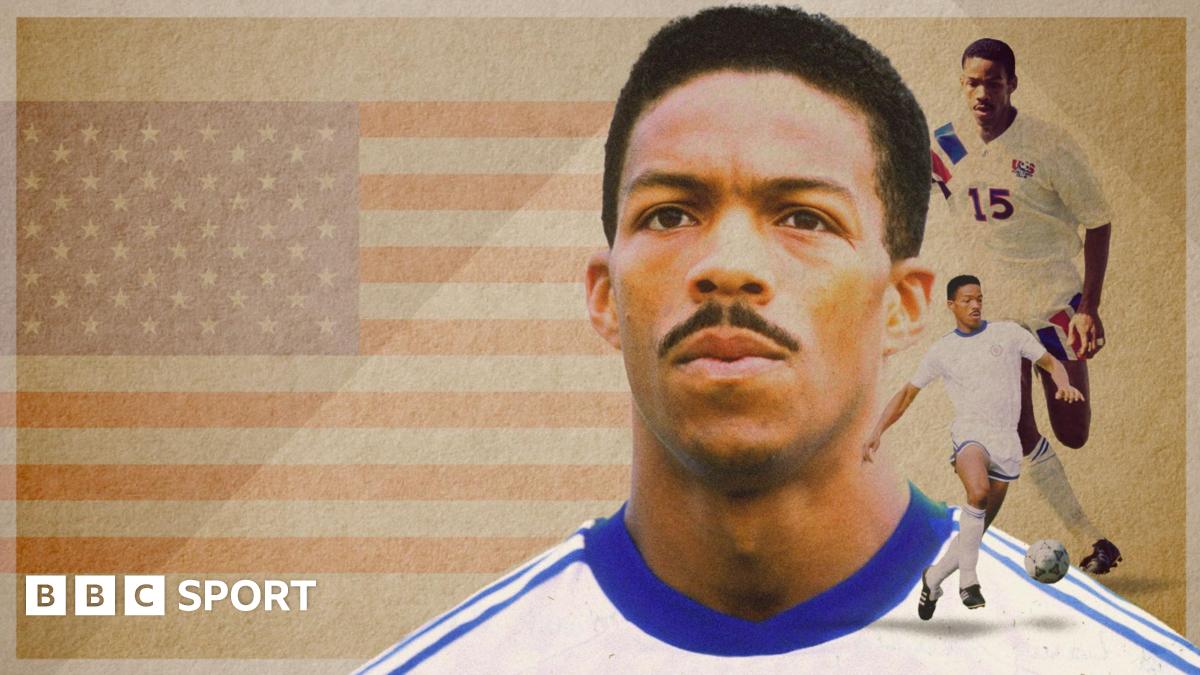
The history of professional soccer in the United States is a narrative defined by paradox. While the sport is globally recognized as the “people’s game”—requiring nothing more than a ball and a patch of ground,its development within the American domestic market was historically predicated on suburban affluence and institutionalized pay-to-play structures. This systemic divergence from the global model created a unique set of challenges for talent acquisition and professional development. The journey of Desmond Armstrong, a foundational figure in the modern era of the U.S. Men’s National Team (USMNT), serves as a quintessential case study in how individual talent intersected with a fractured professional landscape to eventually birth the modern American soccer infrastructure.
The transition from the flamboyant, celebrity-driven era of the North American Soccer League (NASL) in the 1970s to the strategic, centralized residency programs of the late 1980s represents one of the most critical pivots in American sports history. It was a period marked by the collapse of traditional professional pathways and the necessity of unconventional administrative interventions. By analyzing the socioeconomic hurdles, the structural vacuum of the 1980s, and the tactical centralization of the national team, one gains a comprehensive understanding of the forces that shaped the United States into a recurring participant on the world stage.
The Socioeconomic Divide and the “Pay-to-Play” Paradigm
In most footballing superpowers, from Brazil to the Netherlands, the path to professional excellence is subsidized by elite academies. In the United States, however, the grassroots model evolved into a consumer-funded industry. This “pay-to-play” framework necessitated that families meet significant financial obligations to participate in competitive youth leagues, effectively gatekeeping the sport behind a barrier of middle-class and upper-class suburban residency. For players like Desmond Armstrong, whose family moved from Southeast Washington D.C. to the Maryland suburbs, access to the game was a matter of geographical and economic fortune rather than institutional scouting.
The cultural spark for many in this era was the arrival of Pelé and the New York Cosmos. Pelé provided a visual and athletic archetype that resonated with African American athletes, many of whom saw in his movement the fluidity of a basketball point guard. Yet, despite this cultural connection, the financial structure of the American game remained antithetical to the global norm. While the rest of the world utilized soccer as a vehicle for social mobility, the U.S. model often excluded those from less affluent households. This systemic disparity meant that the American talent pool was not necessarily the most naturally gifted, but rather the most financially supported, creating a developmental bottleneck that took decades to begin addressing.
The Structural Vacuum: Navigating the Collapse of the NASL
The business of American soccer suffered a catastrophic blow in 1985 with the dissolution of the NASL. For an entire generation of emerging talent, including Armstrong during his collegiate years, the primary professional aspirational target vanished overnight. The absence of a top-flight outdoor league created a professional vacuum that forced the country’s best players into unconventional arenas. This period saw the rise of the Major Indoor Soccer League (MISL) as the primary employer for professional domestic talent. While the indoor game provided a livelihood, it was a fundamental departure from the tactical and physical requirements of the international 11-a-side game.
The reliance on indoor soccer and the collegiate system meant that the player pool was fragmented. There was no cohesive tactical philosophy or consistent level of competition. However, this scarcity of opportunity fostered a resilient “fighter” mentality among the players. To represent the United States during this era meant playing on artificial turf, competing in front of small crowds, and struggling for basic professional respect. Armstrong’s debut in 1987 and his subsequent participation in the 1988 Seoul Olympics occurred at a time when the U.S. was considered a non-factor in the global soccer hierarchy,a peripheral entity with no domestic league and a roster of semi-professional and indoor specialists.
Strategic Centralization and the 1990 World Cup Mandate
The turning point for the sport’s domestic governance came in 1988, when FIFA awarded the United States the hosting rights for the 1994 World Cup. This decision imposed an immediate and existential deadline on the U.S. Soccer Federation (USSF). To avoid national embarrassment on the global stage, the federation had to build a competitive team in a country without a professional league. The solution was an unorthodox, centralized residency model that mirrored the state-sponsored athletic programs of the Eastern Bloc. The federation began signing a core group of players to full-time national team contracts, effectively making the USMNT the country’s only elite professional “club.”

Under the leadership of head coach Bob Gansler, this group was tasked with the Herculean objective of qualifying for the 1990 World Cup in Italy,a tournament the U.S. had not reached in 40 years. This strategic centralization allowed for a level of tactical cohesion and physical conditioning that the previous fragmented system could not provide. It was a high-risk administrative gamble: by bypassing the traditional market-driven model of club soccer, the USSF created a synthetic professional environment. This era of “contracted” national players laid the groundwork for the professional standards that would eventually be formalized with the launch of Major League Soccer (MLS) in 1996.
Concluding Analysis: The Legacy of Institutional Resilience
The development of American soccer from the mid-1980s to the early 1990s serves as a masterclass in crisis management and strategic pivot. The challenges faced by players like Desmond Armstrong,ranging from socioeconomic barriers to the total collapse of professional infrastructure,dictated the rugged, defensive, and highly disciplined identity of the national team for years to come. While the “pay-to-play” model remains a contentious and limiting factor in contemporary talent identification, the period of the late 1980s proved that centralized institutional support could bridge the gap between amateurism and international competitiveness.
Ultimately, the success of the 1990 and 1994 World Cup cycles was not merely a result of athletic talent, but of a necessary bureaucratic intervention that treated the national team as a professional startup. The lessons of this era continue to inform the business of soccer in the United States today, highlighting the ongoing tension between the sport’s potential for mass-market inclusion and the restrictive economic structures that originally defined its American presence. As the U.S. prepares for future international hosting duties, the history of this “impossible task” remains the definitive blueprint for domestic growth under pressure.




