







Strategic Terraforming: The Competitive Escalation of Maritime Land Reclamation
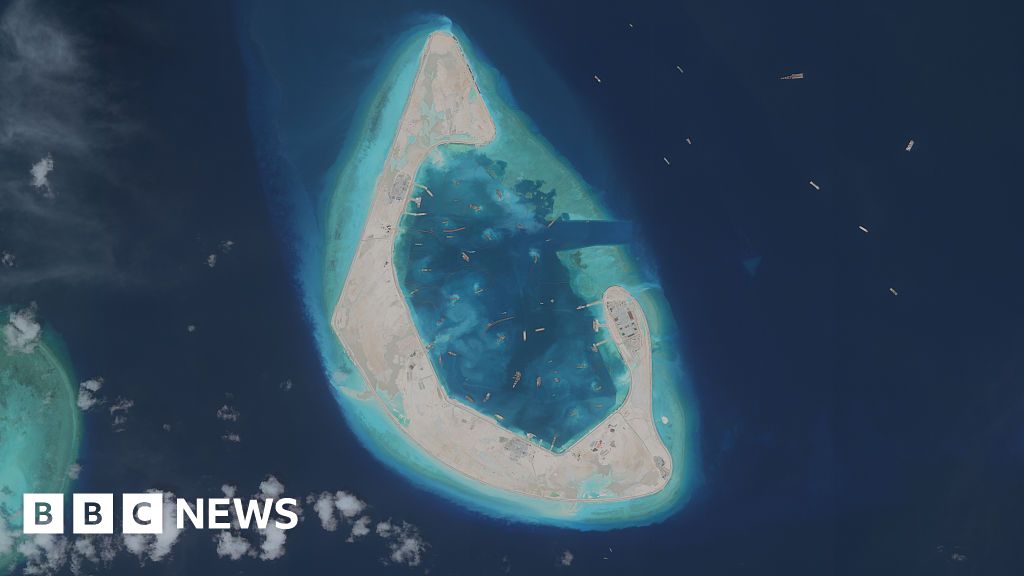
For over a decade, the geopolitical landscape of the South China Sea has been defined by a singular, aggressive strategy of maritime expansionism. China’s “Great Wall of Sand”—a massive campaign of dredging and land reclamation,transformed submerged reefs and tiny outcroppings into fortified military outposts. While regional neighbors and global powers initially responded with diplomatic protests and “freedom of navigation” operations, a significant tactical shift is now underway. Observation has been replaced by emulation. Secondary claimants, most notably Vietnam and the Philippines, have significantly accelerated their own land reclamation efforts, signaling a new, more crowded phase of maritime competition that carries profound implications for global trade, regional security, and international law.
This transition represents a critical evolution in the “gray zone” tactics utilized to assert sovereignty. By creating physical land where none existed, nations are attempting to solidify their legal and military footing in contested waters. What was once a unilateral pursuit by Beijing has become a multilateral race to reshape the geography of the Indo-Pacific. For the global business community, this escalation necessitates a re-evaluation of maritime risk, as the density of military-capable infrastructure in one of the world’s most vital shipping corridors reaches unprecedented levels.
The Vietnamese Response and the Scale of Counter-Reclamation
While China remains the undisputed leader in total acreage created, the pace at which other nations are expanding their footprints is striking. Vietnam, in particular, has emerged as the most active counter-claimer. Recent satellite imagery and maritime surveillance indicate that Hanoi has moved beyond minor repairs of existing outposts to large-scale dredging operations. In the last two years alone, Vietnam has created hundreds of new acres across several features in the Spratly Islands, including Barque Canada Reef and Discovery Great Reef.
This acceleration is not merely about symbolic presence; it is about functional capacity. The new land is being engineered to support larger vessels, extended runways, and more sophisticated surveillance equipment. By expanding these features, Vietnam is creating a defensive perimeter that can theoretically challenge Chinese dominance in the southern reaches of the South China Sea. This strategy reflects a calculated realization among Southeast Asian capitals: diplomatic rhetoric and international tribunal rulings, such as the 2016 Permanent Court of Arbitration decision, have limited efficacy without a physical presence to back them up. Consequently, the “fait accompli” strategy pioneered by Beijing is being adopted as a survival mechanism by its neighbors.
Geopolitical Implications for Global Trade and Resource Security
The South China Sea is not merely a theater for territorial disputes; it is the vascular system of global commerce. Over $3 trillion in trade passes through these waters annually, including a significant portion of the world’s liquefied natural gas (LNG) and crude oil shipments. The proliferation of artificial islands and fortified outposts introduces a layer of operational volatility for the maritime industry. As more actors establish “unsinkable aircraft carriers” throughout the region, the risk of miscalculation or accidental kinetic engagement increases significantly.
From a commercial perspective, this creates a ripple effect throughout the global supply chain. Increased militarization often leads to higher insurance premiums for shipping containers and tankers. Furthermore, the strategic control of these waters is inextricably linked to subsea resources. The seabed in these contested areas is believed to hold vast untapped reserves of hydrocarbons and rare earth minerals. By expanding their physical footprint, nations are positioning themselves to unilaterally exploit these resources or, at the very least, prevent others from doing so. This competitive terraforming effectively “locks in” territorial claims, making future multilateral agreements on resource sharing increasingly difficult to negotiate.
Legal Divergence and the Erosion of International Norms
The technical legality of land reclamation under the United Nations Convention on the Law of the Sea (UNCLOS) remains a point of intense debate. Generally, UNCLOS dictates that artificial islands do not possess the status of islands and do not have their own territorial sea or exclusive economic zone (EEZ). However, the reality on the ground,or rather, on the water,often supersedes legal theory. By establishing permanent populations and military garrisons on these features, nations attempt to create “habitable” status, which could theoretically bolster future legal claims to surrounding waters.
The danger of this current trend is the normalization of unilateral geographic alteration. As more nations engage in large-scale dredging, the environmental cost becomes catastrophic. The destruction of coral reefs and the disruption of local ecosystems are irreversible. Diplomatically, the widespread adoption of reclamation tactics suggests a weakening of the rules-based international order. If every claimant perceives that the only way to protect its interests is through physical expansion, the incentive for cooperative maritime governance vanishes. This shift from “de jure” legal arguments to “de facto” physical occupation sets a precedent that could be mirrored in other contested maritime regions globally, from the East China Sea to the Arctic.
Concluding Analysis: The Future of Maritime Equilibrium
The transition from a unilateral to a multilateral reclamation race marks a point of no return for the South China Sea. We are witnessing the permanent hardening of maritime claims. For years, the international community hoped that China’s activities would be an outlier; instead, they have become the blueprint for regional strategy. This “new normal” suggests that the region is moving toward a state of armed stalemate rather than a negotiated settlement. While the presence of multiple fortified outposts may provide a form of “mutual deterrence,” it also reduces the “maneuvering room” for diplomatic de-escalation.
For investors, stakeholders, and policy analysts, the takeaway is clear: maritime security in the Indo-Pacific is no longer a matter of maintaining the status quo, but of managing a dynamic and increasingly crowded physical environment. The strategic terraforming currently taking place is a clear indicator that regional actors are preparing for a long-term struggle for sovereignty. As the physical map of the ocean continues to change, the traditional frameworks of maritime law and diplomacy will be tested to their breaking points. The strategic focus must now shift toward incident management and the establishment of “hotlines” or communication protocols to prevent the crowded maritime geography from sparking a global economic crisis.





