







The Monaco Paradox: Evaluating Technical Disruptions to Formula 1’s Static Tradition
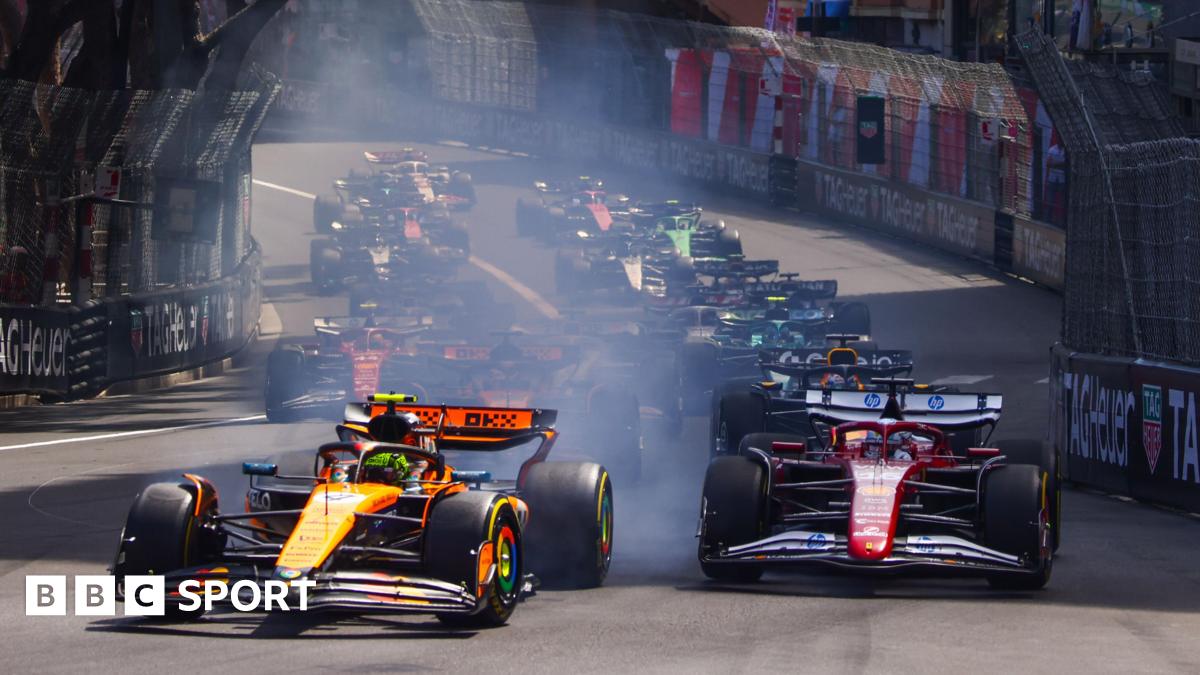
For decades, the Monaco Grand Prix has occupied a precarious position within the Formula 1 calendar. Celebrated as the “jewel in the crown” for its opulence, history, and the sheer skill required to navigate its claustrophobic streets, it has simultaneously faced intensifying criticism for producing a subpar racing product. In recent years, the event has become synonymous with “processional” racing, where the Saturday qualifying session effectively determines the Sunday podium. The 2024 iteration served as a stark data point for this trend, featuring a mere four overtakes across 78 laps, a figure that stands in dismal contrast to the 2025 seasonal average of 66.9 overtakes per grand prix. This disparity highlights a fundamental disconnect between the sport’s modern commercial push for “wheel-to-wheel” action and the physical limitations of the Circuit de Monaco.
However, the current competitive cycle has introduced a suite of radical technical regulations designed to facilitate closer racing and more frequent lead changes. As the sport moves into an era defined by a 50-50 power distribution between internal combustion and electrical energy, the question arises: can engineering ingenuity overcome the geographical constraints of the principality? While the sport has witnessed a surge in “yo-yo racing” on traditional permanent circuits, the application of these dynamics to Monaco’s unique environment requires a sophisticated analysis of energy management, aerodynamic footprints, and tactical deployment.
Dimensional Constraints and the Myth of the Downsized Chassis
A primary grievance cited by drivers and technical directors alike has been the “bloated” nature of modern Formula 1 machinery. The evolution of the sport has seen cars grow significantly in length and width, largely driven by safety structures and the integration of complex hybrid power units. This physical expansion has rendered the tight confines of Monaco,specifically the Grand Hotel Hairpin and the Chicane du Port,functionally obsolete for overtaking between cars of similar performance tiers. The latest regulatory framework has attempted to address this by introducing cars that are 10cm narrower and marginally shorter than their predecessors.
From a technical standpoint, however, these reductions may be insufficient to trigger a meaningful shift in racing dynamics. Despite the 10cm reduction in width, the current cars remain 10cm wider than the nimble chassis of the early 2000s, a period that itself was not known for high overtaking volumes in Monaco. The physics of the track dictate that even a “smaller” modern car occupies a massive percentage of the available racing line. Expert consensus suggests that as long as the aerodynamic wake remains a factor and the braking zones remain infinitesimally short, the marginal decrease in the car’s footprint will likely be negated by the high-downforce setups teams run specifically for this event. Therefore, the physical dimensions of the car are a secondary variable compared to the sophisticated energy systems now at play.
The ‘Overtake Mode’ and the Rise of Energy-Induced Volatility
The most significant catalyst for change in the current era is the refined ‘Overtake Mode,’ a strategic tool that grants a trailing driver,within one second of the car ahead,an additional 0.5MJ of electrical energy per lap. This mechanism is central to the “yo-yo” effect observed on other tracks, where drivers trade positions repeatedly as they manage their electrical reserves. In theory, this provides a massive power offset; when a car in the “attack” phase utilizes its full 350kW (approximately 480bhp) deployment against a car that has exhausted its battery, the speed differential is so vast that the maneuver becomes, as Fernando Alonso aptly described, an “avoiding action” rather than a traditional battle.
In Monaco, however, this energy-driven advantage faces a unique hurdle: the track’s energy profile. Unlike “power circuits” such as Spa-Francorchamps or Monza, where cars are frequently “energy starved”—meaning they cannot recover enough energy to maintain full deployment throughout a lap,Monaco is the least energy-starved circuit on the calendar. Due to the high frequency of heavy braking zones and shorter straights, cars can harvest and maintain a near-full state of charge with relative ease. This suggests that the massive power deltas seen elsewhere, which facilitate easy passing, will be far less frequent in the principality. The trailing car may have the extra 0.5MJ, but if the lead car is never truly “starved” of power, the net advantage may not be enough to overcome the lack of track width.
Mechanical Grip and the Strategic Intersection of Tyre Degradation
If the technical regulations are to produce a breakthrough in Monaco, it will likely occur at the intersection of energy deployment and mechanical grip. The “Overtake Mode” is most effective when the leading car is compromised in other areas, specifically rear tyre longevity. In the slow-speed corners that define Monaco, traction out of the apex is the deciding factor in whether a driver can defend their position. If a leader is struggling with thermal degradation of the rear tyres, they lose the ability to apply power efficiently coming out of corners like Rascasse or Anthony Noghes.
In this scenario, a trailing car equipped with superior mechanical grip and the supplemental 0.5MJ of electrical energy could finally find a window of opportunity. The combination of a traction deficit for the leader and a power surge for the pursuer creates a brief, volatile window where an overtake becomes mathematically possible, even if physically daunting. This places a premium on strategic pit-stop timing and tyre management, shifting the focus from pure aerodynamic performance to the nuanced interplay between the rubber and the electrical motor. This tactical volatility is the only realistic avenue for transforming the Monaco Grand Prix from a high-speed parade into a strategic contest of attrition.
Concluding Analysis: Evolution Over Revolution
In conclusion, while the new technical era of Formula 1 has successfully revitalized racing on traditional circuits, the impact on Monaco is likely to be evolutionary rather than revolutionary. The structural impediments of the circuit,its narrowness and lack of significant straightaways,remain the dominant factors governing the race. The 10cm reduction in car width is a gesture toward better racing, but it does not fundamentally alter the geometry of the track.
The true variable to watch is the management of the 50-50 power split and the potential for “energy-offset” maneuvers. While Monaco’s status as an energy-rich circuit mitigates the extreme “yo-yo” racing seen elsewhere, the ‘Overtake Mode’ provides a tool that did not exist in previous generations. When combined with an offset in tyre age, this could provide the marginal gain necessary to force a mistake or a pass. Ultimately, Monaco remains a test of precision and qualifying excellence; however, the new regulations have introduced a layer of technical complexity that ensures the leader can no longer simply “cruise” at a soporific pace without risking a vulnerability to the sophisticated energy-management strategies of those behind.





