







Strategic Assessment: The Viability and Security Implications of Australia’s Nuclear-Powered Submarine Program
The Australian government has initiated a high-level inquiry into the nation’s multi-decade plan to acquire nuclear-powered submarines under the AUKUS trilateral security pact. This inquiry serves as a critical junction in Australian defense policy, addressing growing skepticism regarding the deliverability of the vessels and the ultimate impact on regional stability. As the most ambitious military endeavor in the nation’s history, the program represents a fundamental shift in Australia’s maritime strategy, moving from conventional diesel-electric capabilities to long-range, nuclear-propulsion technology. The investigation aims to provide a transparent accounting of the program’s feasibility, focusing specifically on two existential questions: the logistical certainty of the delivery timeline and the net effect on national security.
Procurement Integrity and the Industrial Challenge
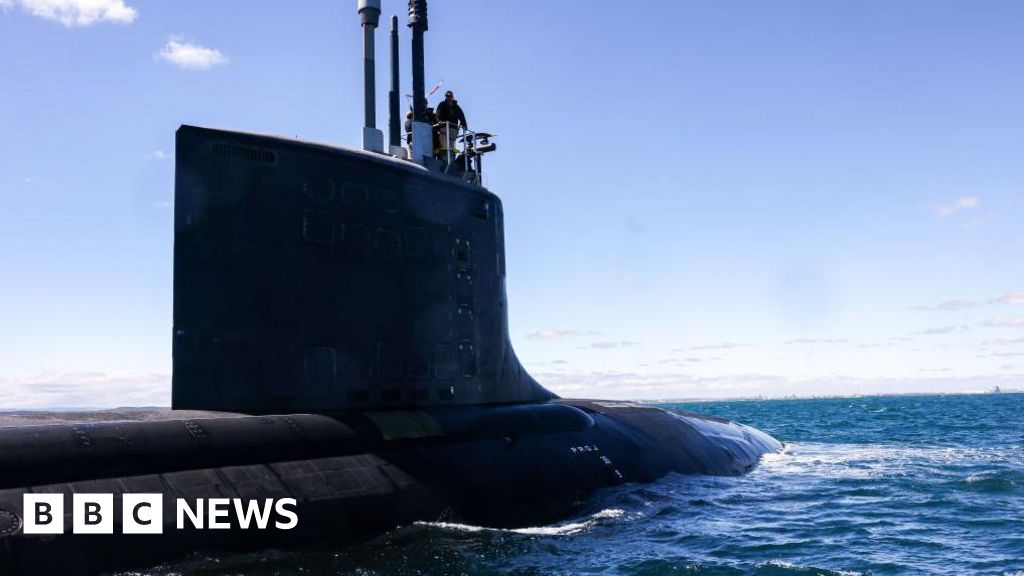
The primary concern for the inquiry is whether Australia will realistically receive the promised Virginia-class submarines from the United States and the subsequent SSN-AUKUS vessels to be co-developed with the United Kingdom. This “Pillar I” initiative faces significant headwinds within the United States domestic industrial base. Current production rates at American shipyards are struggling to meet the U.S. Navy’s own requirements of two Virginia-class submarines per year. For Australia to receive its second-hand and new-build vessels in the 2030s, the U.S. industrial capacity must undergo an unprecedented expansion.
The inquiry will scrutinize the “Sovereign Ready” benchmarks required to ensure Australia can operate and maintain these complex platforms. There are significant concerns regarding the workforce deficit; thousands of specialized engineers, technicians, and nuclear physicists must be trained within a decade. Furthermore, the inquiry must address the “capability gap” that may emerge as the existing Collins-class fleet nears its end-of-life. If the delivery of the nuclear-powered successors is delayed by even a few years, Australia risks a period of significantly diminished naval power, leaving its maritime trade routes vulnerable. The inquiry’s assessment of the procurement timeline is not merely a matter of logistics, but a test of the reliability of the AUKUS partnership under fluctuating political climates in Washington and London.
National Security and the Geopolitical Deterrence Model
Beyond the logistical hurdles lies the fundamental question of whether this acquisition truly makes Australia safer. Proponents of the nuclear-powered transition argue that the stealth, speed, and endurance of nuclear propulsion are the only viable ways to project power and maintain deterrence in an increasingly contested Indo-Pacific. Conventional submarines, which must surface or “snorkel” to recharge batteries, are increasingly vulnerable to modern detection technologies. Nuclear-powered vessels, conversely, can remain submerged for months, providing a persistent threat that complicates the strategic calculus of any potential adversary.
However, the inquiry will also hear from critics who argue that the move could inadvertently decrease national security. One major concern is the “sovereignty gap.” Because the nuclear reactors will be provided as “black box” units by the U.S., Australia will remain deeply dependent on American technical support for the lifespan of the fleet. This dependence raises questions about whether Australia could ever deploy these assets independently of U.S. strategic interests. Additionally, the inquiry must weigh the reaction of regional neighbors. If the acquisition is perceived as an escalatory move that fuels a regional arms race, it could lead to heightened tensions rather than the intended stability. The inquiry will need to determine if the deterrent value of eight nuclear-powered submarines outweighs the potential for diplomatic friction and the risks of technological over-reliance.
Fiscal Sustainability and Industrial Displacement
The projected cost of the submarine program,estimated between $268 billion and $368 billion over the next three decades,imposes a monumental burden on the federal budget. The inquiry is tasked with assessing the opportunity cost of this expenditure. In an era of fiscal tightening, such a massive allocation toward a single platform may result in the underfunding of other critical defense sectors, such as cyber warfare capabilities, long-range missile systems, or regional diplomatic engagement. The sheer scale of the investment demands a rigorous analysis of whether the maritime advantage gained is proportional to the economic sacrifice required.
Furthermore, the inquiry will examine the domestic industrial impact. While the government promises that AUKUS will create a “jobs powerhouse” in South Australia and Western Australia, the integration of Australian industry into the global nuclear supply chain is a daunting task. There is a risk that the local defense industry could become a mere assembly point for foreign technology rather than a hub of innovation. The inquiry will investigate the mechanisms in place to ensure that the intellectual property and high-tech manufacturing skills developed during this process stay within Australia, fostering a sustainable industrial ecosystem that can outlast the initial procurement phase.
Concluding Analysis
The inquiry into Australia’s nuclear-powered submarine acquisition is a necessary exercise in national due diligence. The transition from conventional to nuclear power is not merely a tactical upgrade; it is a total realignment of Australia’s strategic identity. While the technological advantages of nuclear propulsion are indisputable in the context of modern naval warfare, the path to procurement is fraught with industrial and political risks that cannot be ignored. The success of the program hinges on the U.S. shipyard capacity and Australia’s ability to rapidly cultivate a nuclear-competent workforce,two factors that remain highly volatile.
Ultimately, the inquiry must provide a clear-eyed view of the trade-offs. To make Australia safer, these submarines must arrive on time and operate within a framework that preserves Australian sovereignty. If the inquiry reveals that the delivery timelines are unrealistic or that the cost will cannibalize other essential defense capabilities, the government may be forced to consider mid-course corrections. In the final analysis, the AUKUS submarine project is a high-stakes gamble on the future of Indo-Pacific stability. For the investment to be justified, the government must demonstrate that these vessels provide a decisive edge that conventional alternatives cannot match, while ensuring the nation is not left vulnerable during the long transition period.





