







The Vienna Nexus: Assessing the Resurgence of Russian Intelligence Operations in Austria
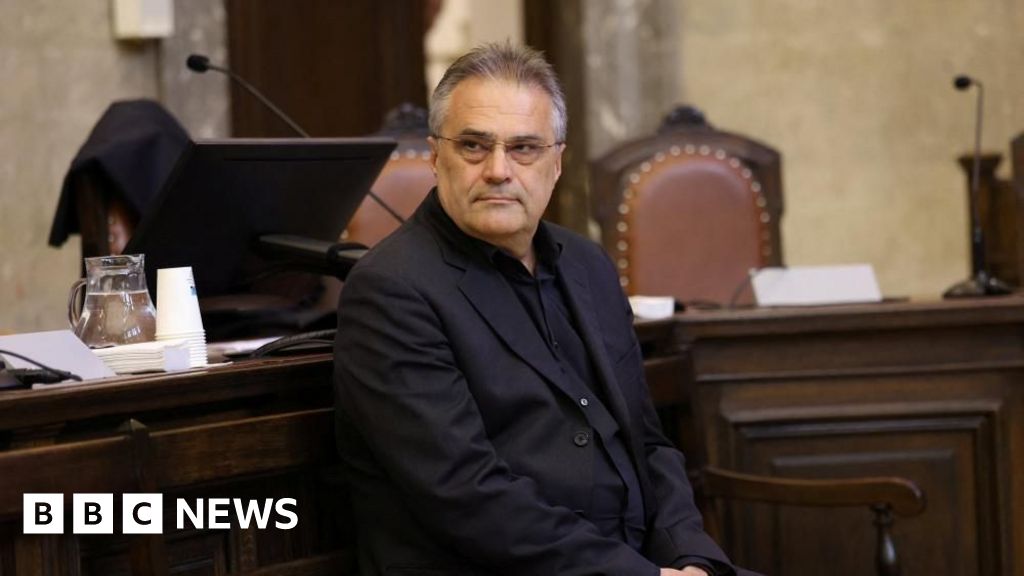
The recent uncovering of a high-profile espionage scandal within the Austrian security apparatus has sent shockwaves through the European intelligence community, reigniting deep-seated concerns regarding Vienna’s role as a primary theater for Russian clandestine activities. For decades, Austria has navigated a delicate geopolitical tightrope, leveraging its constitutional neutrality to serve as a diplomatic bridge between the East and the West. However, the arrest of Egisto Ott, a former senior official in the now-defunct Federal Office for the Protection of the Constitution and Counterterrorism (BVT), has exposed the systemic vulnerabilities inherent in this posture. The allegations,ranging from the systematic exfiltration of sensitive data to facilitating the operations of high-level Russian assets,suggest that the “Island of the Blessed,” as Austria is often colloquially known, may actually function as an unchecked playground for foreign intelligence services. This development is not merely a domestic criminal matter; it represents a significant breach of trust within the European security architecture and necessitates a rigorous re-evaluation of Austria’s internal security protocols and legislative frameworks.
The Historical Legacy of Neutrality and Institutional Infiltration
To understand the current crisis, one must examine the historical context that transformed Vienna into a global hub for espionage. Since the 1955 State Treaty, Austria has maintained a policy of permanent neutrality, which, while providing diplomatic advantages, created a permissive environment for foreign intelligence officers. During the Cold War, Vienna served as a primary listening post for both the KGB and the CIA. Crucially, the Austrian legal code contains a specific, and increasingly controversial, loophole: espionage is only considered a criminal offense if it is directed specifically against the Austrian state. Spying on international organizations, foreign embassies, or other governments from Austrian soil remains largely unprosecuted. This legislative oversight has turned the city into a logistical sanctuary for intelligence operatives who can coordinate regional activities with minimal risk of legal repercussions.
The current scandal highlights how this permissive environment has allowed Russian interests to penetrate the very core of Austria’s domestic security services. The case involving Ott is intrinsically linked to Jan Marsalek, the fugitive former executive of the collapsed German payments firm Wirecard, who is believed to have long-standing ties to Russian intelligence. The allegations suggest a sophisticated pipeline of information where Austrian officials provided Russian handlers with encrypted communications, confidential law enforcement databases, and even physical surveillance of Kremlin critics living in the West. This level of infiltration indicates that Russian influence is not merely external but has successfully co-opted elements of the state bureaucracy, utilizing partisan political connections and institutional inertia to mask its operations.
Legislative Inertia and the Erosion of Multilateral Trust
The structural failures of the Austrian intelligence community have led to a significant erosion of trust among its Western partners. In recent years, Austria’s primary domestic intelligence agency was effectively sidelined by the “Club of Berne”—an informal intelligence-sharing forum comprising EU member states, the UK, the US, and others,due to fears that shared secrets would inevitably leak to Moscow. The rebranding of the BVT into the Directorate of State Security and Intelligence (DSN) in 2021 was intended to signify a fresh start and a hardening of internal defenses. However, the legacy of political appointments and the lack of a robust vetting process continue to plague the transition.
Furthermore, the political landscape in Austria has complicated efforts to reform the security sector. The influence of parties with historically close ties to the Kremlin has historically hindered aggressive counter-intelligence measures. When political leadership is perceived as soft on foreign interference or, worse, ideologically aligned with the aggressor, the intelligence services face a crisis of mission and morale. The failure to modernize Section 256 of the Criminal Code to criminalize all forms of espionage on Austrian soil is frequently cited by legal experts and security analysts as a primary failure of the legislative branch. Without this legal mechanism, Austrian counter-intelligence is essentially fighting with one hand tied behind its back, unable to disrupt foreign operations that do not explicitly target Austrian ministries.

Geopolitical Repercussions and the Cost of Operational Negligence
The implications of Austria’s “spy problem” extend far beyond its borders, impacting the broader security of the European Union and NATO. As Russia continues its hybrid warfare against Western democratic institutions, a compromised Vienna serves as a strategic vulnerability in the heart of Europe. The exfiltration of Western technology, the tracking of political dissidents, and the potential for sabotage are all facilitated by the ease with which Russian assets operate within Austrian territory. For the Austrian business community, this reputation carries a significant risk; an environment where corporate secrets can be stolen with impunity is one that discourages high-tech investment and undermines the integrity of the financial sector.
The cost of operational negligence is also measured in diplomatic capital. Austria’s traditional role as a mediator is predicated on the assumption that it can provide a secure and neutral ground for sensitive negotiations. If the state is viewed as unable or unwilling to protect the privacy and security of foreign delegations, its utility as a diplomatic hub will rapidly diminish. The international community is increasingly demanding that Austria choose between its traditional interpretation of neutrality,which some argue has morphed into a form of functional complicity,and its responsibilities as a committed member of the European security order.
Strategic Analysis: A Paradigm Shift in Security Policy
The current spy scandal represents a watershed moment for Austrian security policy. The era of strategic ambiguity, where the state could ignore foreign intelligence activities on its soil for the sake of diplomatic convenience, has become untenable in the current geopolitical climate. For Austria to restore its credibility, a comprehensive paradigm shift is required. This must begin with the immediate closure of legislative loopholes that permit foreign intelligence services to operate with impunity. Criminalizing all forms of espionage, regardless of the target, is an essential first step in signaling a departure from the “blind eye” policies of the past.
Moreover, the professionalization of the DSN must be accelerated, with a strict focus on meritocracy and the total insulation of the security services from partisan political interference. Robust oversight mechanisms, involving both judicial and multi-party parliamentary review, are necessary to ensure that the agency remains focused on national security rather than political maneuvering. Ultimately, Austria’s security is inextricably linked to the collective security of Europe. Failing to purge Russian influence from its institutions will not only leave Austria isolated but will continue to provide a strategic advantage to those seeking to undermine European stability. The time for passive neutrality has passed; the current threat landscape demands active, transparent, and uncompromising defense of the rule of law.




