







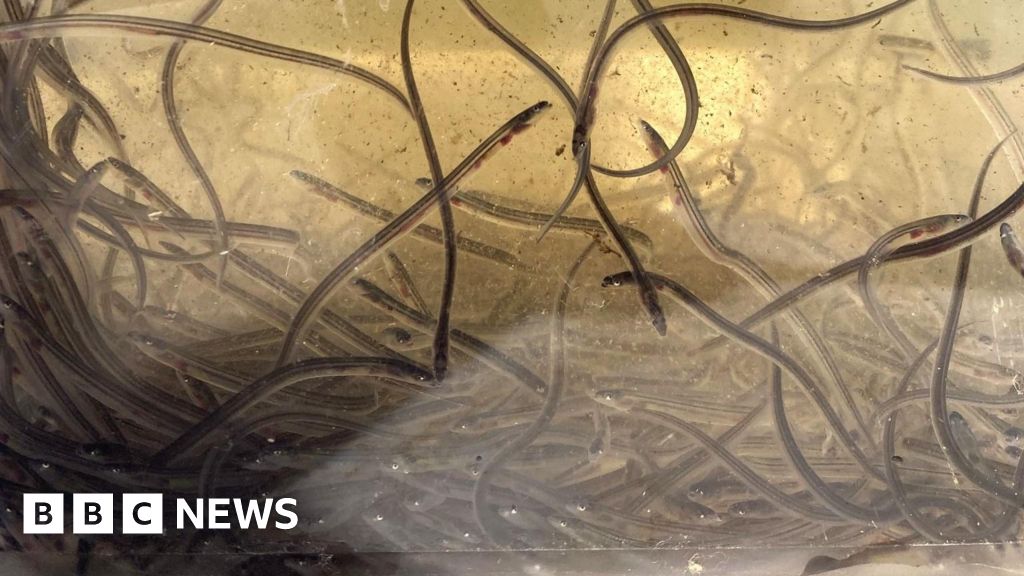
Strategic Overview of the European Eel Crisis: Ecological Collapse and Regulatory Implications
The European eel (Anguilla anguilla) currently represents one of the most significant conservation challenges within the European Union’s marine and freshwater jurisdictions. Since the early 1980s, the species has experienced a precipitous decline in recruitment,the process by which young glass eels reach continental waters,dropping by an estimated 90% to 95%. This collapse is not merely a localized environmental concern but a systemic indicator of deteriorating aquatic health across the continent. The International Council for the Exploration of the Sea (ICES) has consistently issued stark warnings, categorizing the stock as being “outside safe biological limits.” For stakeholders ranging from commercial fisheries to hydroelectric energy providers and environmental regulators, the trajectory of the European eel population demands an urgent, multi-faceted strategic response that addresses the complex interplay between biology, infrastructure, and international trade.
Anthropogenic Infrastructure and Migratory Fragmentation
A primary driver of the decline in eel populations is the extensive fragmentation of European river systems. Eels are catadromous, meaning they spawn in the ocean,specifically the Sargasso Sea,and migrate to freshwater environments to mature. This complex life cycle makes them uniquely vulnerable to human-engineered changes in river morphology. Over the past four decades, the proliferation of hydroelectric dams, pumping stations, and weirs has created a gauntlet of physical barriers that prevent upstream migration and cause high mortality rates during downstream returns.
From an industrial and engineering perspective, the impact of these barriers is profound. Modern turbines, while essential for carbon-neutral energy production, pose a significant mechanical risk to silver eels migrating toward the sea. The physical trauma of turbine passage often results in immediate mortality or severe injury that compromises the eel’s ability to navigate the Atlantic. Furthermore, the loss of over 80% of historical wetland habitats has reduced the carrying capacity of European inland waters. To mitigate these impacts, a transition toward “eel-friendly” infrastructure,including bypass channels and sophisticated fish passage technologies,is no longer an optional environmental safeguard but a regulatory necessity for energy operators seeking compliance with the EU Eel Regulation (EC 1100/2007) and the Water Framework Directive.
Bioaccumulation and the Impact of Environmental Toxins
The European eel is a long-lived, high-fat content predator, a biological profile that makes it exceptionally susceptible to the bioaccumulation of persistent organic pollutants (POPs) and heavy metals. Since the 1980s, the presence of polychlorinated biphenyls (PCBs), mercury, and various brominated flame retardants in European sediment has reached critical levels. Unlike many other species, eels store these toxins in their fatty tissues for years. During their final trans-Atlantic migration, these fat reserves are metabolized to fuel the journey and facilitate gonad development, effectively releasing a concentrated dose of toxins into their reproductive organs.
This internal chemical burden significantly impairs reproductive success. Research indicates that high levels of contaminants reduce egg viability and larval fitness, contributing to the recruitment failure observed over the last forty years. Beyond chemical pollution, the emergence of the swim-bladder nematode Anguillicola crassus, likely introduced via global trade, has further compromised the species’ physiological resilience. These environmental stressors operate in tandem, weakening the population’s ability to withstand external shocks, such as fluctuating sea surface temperatures and changes in the North Atlantic Drift,factors that are increasingly linked to the broader impacts of global climate change on larval transport.
Illegal Trade and the Global Market for Glass Eels
The economic dimensions of the eel crisis are characterized by high market volatility and a lucrative illegal trade network. Because eels cannot yet be bred in captivity on a commercial scale, the entire aquaculture industry relies on the capture of wild glass eels. This dependence has created a high-stakes black market, often described as one of the most significant wildlife trafficking issues in the European Union. Despite the 2009 listing of Anguilla anguilla under CITES Appendix II and a subsequent ban on exports outside of the EU, illegal shipments to Asian markets,where glass eels are grown to maturity in ponds,continue to undermine conservation efforts.
The profitability of this “white gold” is staggering, with prices at certain points in the supply chain rivaling those of precious metals. This underground economy complicates regulatory enforcement and creates an uneven playing field for legitimate commercial interests. For the legal fishing industry, the decline has resulted in increasingly stringent quotas and seasonal closures, threatening the livelihoods of traditional riverine communities. The strategic challenge lies in implementing a transparent, traceable supply chain that can distinguish between legally harvested stock and trafficked eels, thereby stabilizing the market and ensuring that economic activities do not further accelerate the species’ extinction.

Concluding Analysis: The Path Forward
The decline of the European eel is a multifaceted crisis that serves as a benchmark for the broader challenges of biodiversity management in a highly industrialized landscape. The data since the 1980s suggests that the species is caught in a “perfect storm” of habitat loss, chemical toxicity, and over-exploitation. Addressing this decline requires a holistic policy framework that moves beyond simple harvest restrictions. A comprehensive recovery plan must prioritize the restoration of longitudinal connectivity in river systems, ensuring that eels have safe passage from headwaters to the sea. Additionally, stringent controls on water quality and sediment contamination are essential to improve the health and reproductive potential of the remaining stock.
From a business and regulatory standpoint, the survival of the European eel will depend on the successful integration of ecological goals into economic planning. This includes investing in innovative monitoring technologies, such as environmental DNA (eDNA) and satellite tracking, to better understand migration patterns and recruitment dynamics. Ultimately, the eel’s recovery is a long-term endeavor; given their slow maturation and complex life cycle, it may take decades for the population to stabilize. The institutional commitment to this recovery will serve as a definitive test of Europe’s ability to manage its natural capital in an era of unprecedented environmental change.




