







Resilience as a Strategic Asset: The Evolution of Alex Zanardi’s Professional Career
The trajectory of professional motorsports is often defined by a razor-thin margin between technical excellence and catastrophic failure. In the high-stakes environment of open-wheel racing, few case studies offer as profound a lesson in risk management, personal fortitude, and adaptive performance as that of Alex Zanardi. A two-time CART champion, Zanardi represented the pinnacle of automotive engineering and driver intuition. However, his career is not merely a record of victories on the asphalt; it is a seminal example of how a professional can navigate a life-altering crisis to redefine their value proposition across entirely different disciplines. This report examines the pivotal 2001 accident at the Lausitzring, the technological innovations that facilitated his return to the cockpit, and his subsequent transformation into one of the most dominant Paralympic athletes in history.
The Lausitzring Incident: Crisis Management and Medical Intervention
In September 2001, the motorsport world was operating under a cloud of global uncertainty following the geopolitical shifts in the United States. It was within this context that Alex Zanardi, driving for the Mo Nunn Racing team, competed in the American Memorial 500 at Germany’s Lausitzring. While leading the race in the closing stages, a low-speed exit from the pit lane resulted in a loss of traction, causing Zanardi’s vehicle to spin across the grass and onto the live racing line. The resulting impact was a broadside collision with Canadian driver Alex Tagliani, whose car struck Zanardi’s chassis at approximately 200mph. The kinetic energy of the impact was comparable to a localized explosion, shearing the nose of the car and inflicting traumatic, life-threatening injuries on the driver.
The survival of Alex Zanardi remains a benchmark in emergency medical response within high-speed sporting environments. Having lost approximately 75% of his blood volume and suffering seven cardiac arrests, Zanardi’s survival was contingent upon the rapid triage conducted by the CART medical team, led by Dr. Steve Olvey. The aftermath saw Zanardi hospitalized in Berlin, where he remained in a medically induced coma. From a physiological standpoint, the loss of both lower limbs would traditionally signal the termination of a professional athletic career. However, Zanardi’s cognitive response upon regaining consciousness,a focus on the functional assets remaining rather than the physical capacities lost,established a psychological framework that would define his professional “second act.” This mindset shift from deficit-based thinking to asset-based optimization is a critical study in organizational and individual resilience.
Adaptive Innovation and the Return to Competitive Motorsport
The transition from recovery to active competition required a sophisticated integration of prosthetic engineering and automotive modification. Zanardi did not merely seek a return to a sedentary life; he sought a return to the elite competitive tiers of motorsport. In 2003, two years after the accident, he returned to the Lausitzring to symbolically complete the final 13 laps of the race he had started. Driving a modified CART vehicle equipped with bespoke hand-operated controls for acceleration and braking, Zanardi recorded lap times that would have qualified him in the top half of the grid for a professional race. This performance served as a proof-of-concept for adaptive driving technologies.
This success facilitated a multi-year partnership with BMW, a corporate entity that recognized the value of Zanardi’s brand and technical feedback. Competing in the World Touring Car Championship (WTCC) between 2005 and 2009, Zanardi utilized a highly customized BMW 320i. The engineering challenges were significant: the vehicle required a complex lever system on the steering wheel to manage throttle and brake pressures without the leverage of legs. Despite these mechanical hurdles, Zanardi secured four race wins in the WTCC, demonstrating that technical adaptation, when paired with elite-level skill, can mitigate significant physical disadvantages. This period of his career highlighted the importance of corporate synergy and the role of specialized engineering in overcoming operational barriers.
Strategic Pivot: Achieving Global Dominance in Para-Athletics
While his return to touring cars was a triumph of technology and will, Zanardi’s transition into hand-cycling represented a strategic pivot into a new domain of physical excellence. Approaching his 40s,an age where most professional athletes face retirement,Zanardi began applying his understanding of aerodynamics, training discipline, and mechanical efficiency to the sport of hand-cycling. His debut at the 2007 New York City Marathon, where he placed fourth after only four weeks of specialized training, served as a precursor to a decade of unprecedented dominance. By 2011, he had secured a victory in the New York Marathon, signaling his arrival as a premier force in the para-athletic world.

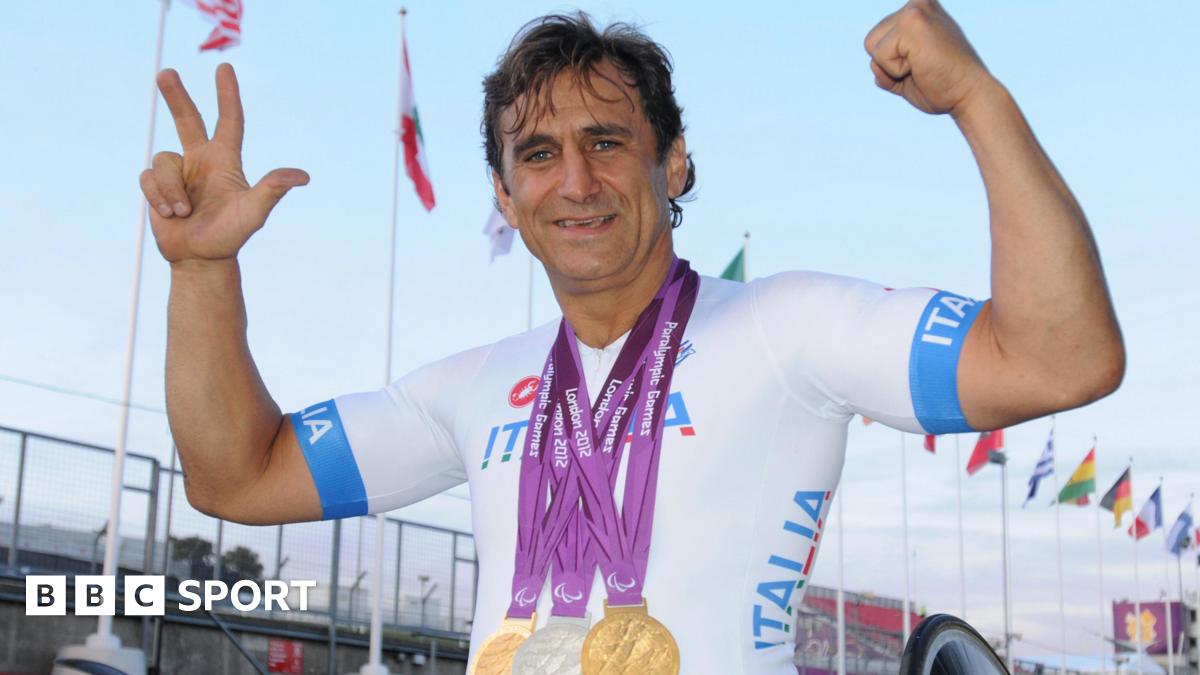
The pinnacle of this transition occurred during the 2012 London and 2016 Rio de Janeiro Paralympic Games. Zanardi secured a total of four gold medals across road races and time trials, demonstrating a level of physiological conditioning that rivaled his peak years in motorsports. Between 2013 and 2019, he further solidified his legacy by amassing 12 World Championship gold medals. This phase of his career is particularly notable for the transferability of his skills; the same focus on “marginal gains” and technical precision that made him a champion in CART was redirected toward human-powered performance. Zanardi effectively rebranded himself from a “racing driver who survived” to a “world-class athlete who dominates,” showcasing the power of professional diversification.
Concluding Analysis: The Architecture of the Unconquerable Mind
The professional journey of Alex Zanardi offers a blueprint for navigating catastrophic disruption. His career can be categorized into three distinct phases: elite performance, crisis survival/adaptation, and secondary domain mastery. From an expert perspective, the most significant takeaway is not the physical recovery itself, but the cognitive agility required to abandon a former identity and build a new one based on current realities. Zanardi’s ability to “focus on what remained” allowed him to bypass the traditional pitfalls of trauma-induced stagnation.
Furthermore, his story underscores the critical role of technical innovation in modern professional life. Whether through the medical protocols that saved his life or the hand-control systems that allowed him to race again, technology served as the bridge between impossibility and achievement. For leaders and professionals, Zanardi’s legacy serves as a reminder that resilience is not a passive trait but an active, strategic choice. By combining psychological fortitude with a willingness to adapt technically, individuals can achieve a level of longevity and impact that transcends their original professional boundaries.




